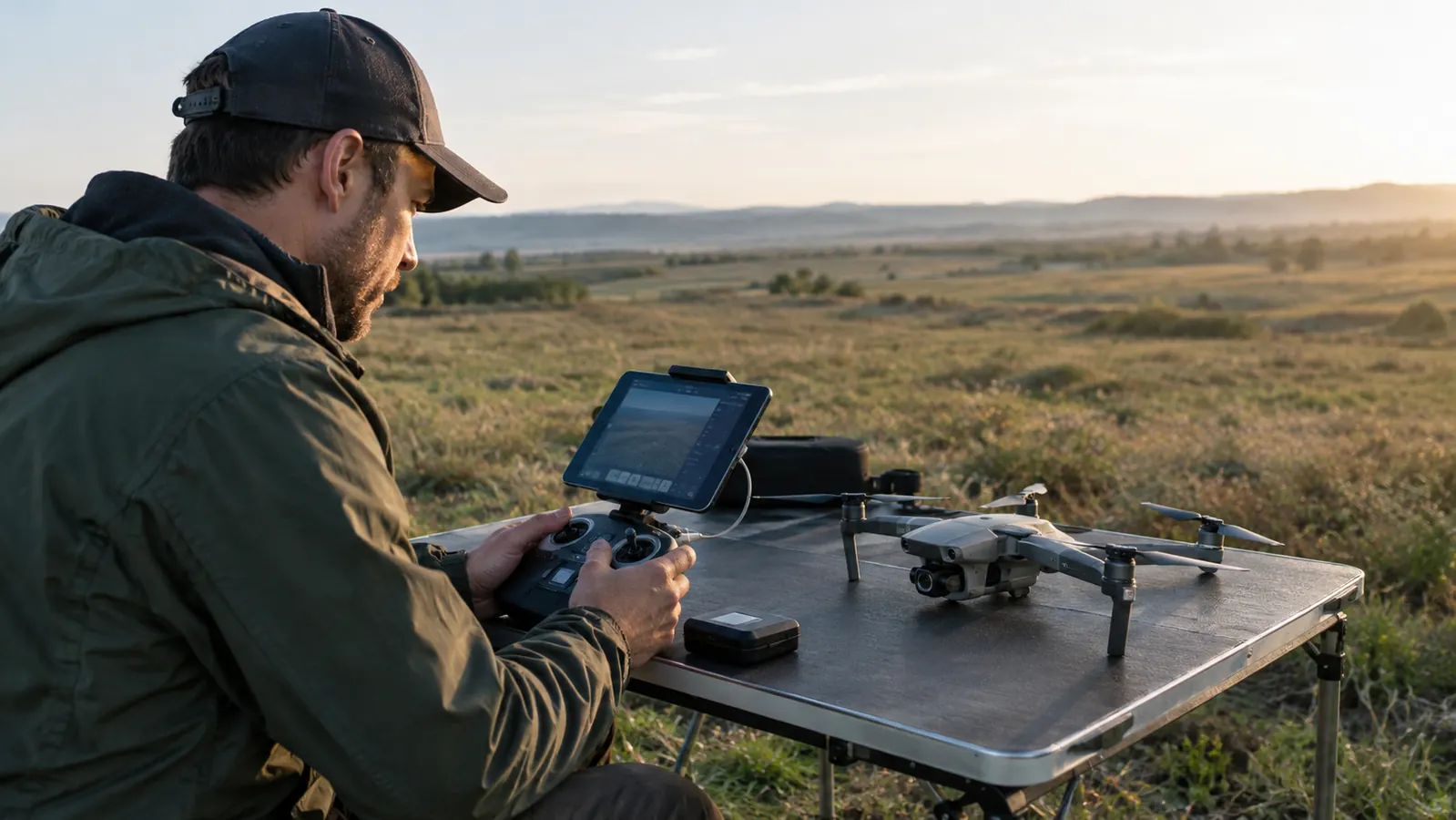
For the first year I flew my Mini 4 Pro, I used the phone clip built into the RC-N2 controller. It worked. I could see the camera feed, line up a shot, and land without drama. But I kept leaning forward, squinting at a six inch screen, and re-flying shots because I missed a branch or a fence line. About a year ago I added the Hanatora tablet holder and started flying with an iPad mini. This is the comparison I wish someone had given me before I bought it.
The short answer: if you mostly fly quick battery checks or grab a few shots on a lunch break, the stock clip is fine. If you want to actually frame a shot, check focus, and see what the camera sees, the bigger screen wins. I kept the Hanatora on the controller for almost every flight since. The stock clip stays in the case as a backup.
The Two Setups Side by Side
| Hanatora tablet holder | Stock phone clip | |
|---|---|---|
| Screen size | Holds tablets from 4.7 to 13 inches. I fly with an iPad mini. | Fits a phone. Mine is about six inches. |
| Framing | Big screen makes it easier to track subjects and spot obstacles. | Small screen. I missed branches and fence lines more than once. |
| Glare | The holder lets me tilt the tablet to cut glare in bright sun. | The phone sits in a fixed position. Glare was a constant fight. |
| Weight and balance | Adds noticeable weight up high. My arms got tired on long flights. | Keeps the controller light and balanced. |
| Portability | A separate piece to carry. I keep it in the JSVER hard case. | Nothing extra to pack. It is always attached to the controller. |
| Setup time | A couple of minutes to attach and adjust. | Seconds. Snap the phone in and go. |
| Cost | Costs more than the stock clip. | Free with the controller. |
| Durability | Metal arms and a solid clamp. Held up through a year of field use. | Plastic clip works, but it feels like it would crack under pressure. |
| Best for | Pilots who want a bigger screen for framing and checking focus. | Quick flights where light and simple matter most. |
How I Tested Both
I did not do a controlled test with charts and timers. I flew the way I normally fly. For the first year with the Mini 4 Pro, I used the phone in the stock clip on the RC-N2. Then I switched to the Hanatora with an iPad mini and flew another year. Same fields, same lakes in north Idaho, same habit of flying until the low battery warning.
Most of my flying is over open farm fields east of Spokane and a public park in town. I also take the drone to the Palouse hills when the light is good. That mix matters because it includes both wide open spaces and places with trees, fences, and power lines. The small screen cost me more than once in the places with obstacles. One afternoon in the park, I clipped a thin branch with the props because I simply did not see it on the phone. The drone dropped a few feet, picked up a couple of scuffs on the shell, and I counted myself lucky it was not worse. It was the kind of mistake that makes you rethink the whole setup.
What I Looked For Before I Switched
Before I bought the Hanatora, I made a list of what was actually bothering me about the phone clip. It was not the screen size alone. It was that I could not see detail in the shadows, I could not hold the controller at a comfortable angle in bright sun, and I was re-flying shots more than I wanted to. I wanted a mount that solved those three things without turning the controller into a brick.
The Hanatora checked the boxes on paper. It holds tablets from 4.7 to 13 inches, so my iPad mini fit with room to spare. The arms are metal, which mattered to me because I had already cracked a plastic phone mount on a different controller. And it comes with a lanyard, which I did not think I needed until I used it on a windy day over a field. I also measured the clamp opening against the RC-N2 before ordering, because the last thing I wanted was a mount that fit the controller in the photos but wobbled in real life.
Where Hanatora Wins
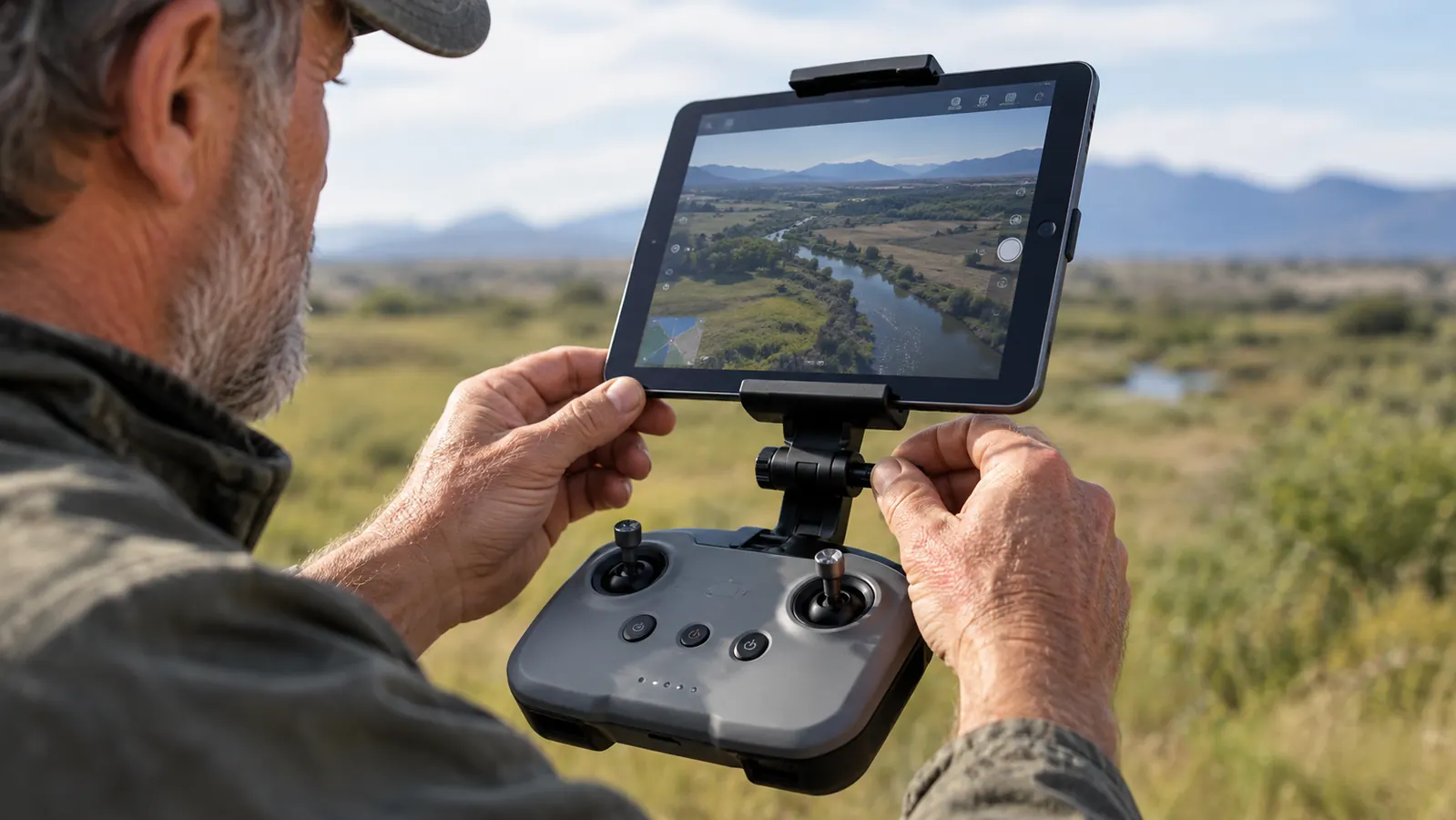
The screen size is the whole story. On the phone clip, I was flying with one eye on the drone and one eye on a screen the size of a business card. The iPad mini shows the same feed, but with enough detail that I can see a thin branch before I fly into it, check whether the focus is actually on the subject, and notice when the ND filter is leaving a soft corner. That alone cut my re-flights way down. I counted six re-flights in my last month with the phone clip. In a typical month with the Hanatora, it is usually zero or one.
The tilt adjustment matters more than I expected. The RC-N2 holder on the Hanatora lets me angle the tablet so the sun is behind me or off to the side. With the phone clip, I was stuck with whatever angle the controller happened to be at. On bright afternoons in the Palouse, that meant holding the controller up like a tray to get a readable screen. I do not miss that. One afternoon last July, the glare was so bad on the phone that I flew a whole battery without really seeing the feed, and the footage showed it. I have not had a flight like that since the switch.
Where the Stock Clip Wins
The stock clip wins on simplicity. It is always there, it adds no weight, and it takes two seconds to set up. When I flew with the phone clip, I could grab the controller, snap in my phone, and be airborne before the drone finished its compass check. There is something to be said for a setup that does not make you think. On a workday evening, when I have maybe twenty minutes of light left, that speed is the whole point.
It also balances better. The Hanatora puts the weight of a tablet up high, and the controller wants to tip forward. I got used to it, but on a long session my forearms would complain. With the phone in the stock clip, the controller feels like DJI designed it around that weight. If I am flying a quick battery after work, I honestly do not mind the small screen. There is a reason the clip is still in my case.
The Bigger Screen Is Worth the Extra Bag Space
If you are tired of squinting at a phone screen while you fly, the Hanatora tablet holder is the fix. It holds my iPad mini securely, tilts to cut glare, and has survived a year of field use.
Amazon Check Today's Price on Amazon →What the Bigger Screen Actually Changes
Framing is the obvious one. With the phone, I would line up a shot, think it looked good, and then see on the computer that the horizon was tilted or a fence post was in the corner. With the iPad mini, I catch those mistakes in the field. It is the difference between flying blind and flying with a viewfinder. The tablet also makes it easier to show someone else what the camera sees before you press record, which matters when my wife Tara is spotting a landing zone for me.
Focus is the quieter win. The Mini 4 Pro does a good job on autofocus, but I shoot with ND filters a lot, and the depth of field can be thin. On a phone screen, a slightly soft subject looks fine. On the tablet, I can see it and adjust before I waste a battery. That alone is worth the extra weight for me. Last fall I was shooting a lone tree on a ridge in the Palouse, and on the tablet I could see the focus had grabbed a grass stem in the foreground. On the phone, I would have flown home with that shot and only noticed it on the computer.
The Downsides Nobody Mentions
The Hanatora is not a magic fix. It adds weight, and the controller balances differently. I noticed it most on a long session over a lake in north Idaho, where I flew three batteries in a row. My arms were tired by the end. You can mitigate it by propping your arms on something, but you should know it going in. I have started bringing a small folding table on longer shoots, which gives my forearms a rest between batteries.
It also takes up space in the case. I keep it attached to the RC-N2 inside the JSVER hard case, and it fits, but just barely. The foam is snug around the controller with the holder on. If you use a small soft case, you may need to remove the holder every time you pack up. That is a minor hassle, not a deal breaker. I tried it with the old soft shoulder bag I used before the JSVER, and the bag would not close properly, so the holder now lives on the controller full time.
How the Hanatora Holds Up After a Year
A year of field use is a fair test. The holder has been in and out of the JSVER case, clamped and unclamped, tilted and tightened more times than I can count. The metal arms still lock down without slop. The clamp still grips the RC-N2 the same way it did on day one. I have not had to tighten a screw or adjust anything since I set it up, and I am not gentle with my gear. It rides in the work truck with me most weeks.
The only wear I can point to is on the rubber pads that grip the tablet. They have picked up a little dust from being in the case, but they still hold the iPad mini firmly. I expected the clamp spring to soften over time. It has not. For the money, the build quality is better than I expected. I have owned cheaper phone mounts that developed wobble within a couple of months, so this is the first mount I have not felt the need to replace.
A Few Things I'd Change
Nothing is perfect. The Hanatora is heavier than I would like, and the weight sits high, so the controller wants to tip forward. I fixed most of that by resting my forearms on my knees when I am sitting, or on the roof of my truck when I am standing. It is manageable, but it is the first thing I would mention to a friend. The lanyard helps too, because it takes some of that tipping weight off your grip.
I also wish the tilt adjustment had a little more range in one direction. On a bright day, I can angle the tablet to cut most of the glare, but there have been a few afternoons where I still had to turn my body to find a clean angle. It is a small thing, and it has not made me want to switch back. If Hanatora ever revises the design, a little more tilt range in both directions would be my one request.
What About the Lanyard?
The Hanatora comes with a lanyard that clips to the controller. I ignored it for the first month. Then I flew on a windy afternoon over a field east of Spokane, and I found myself gripping the controller harder than I needed to. The lanyard takes the weight off your hands when you are holding the controller at chest height. I use it every flight now. On that windy afternoon, the tablet was catching the breeze like a sail, and the lanyard kept the controller from pulling out of my hands when I reached down to swap a battery.
It is not a fancy feature, but it is the kind of thing you do not appreciate until the wind is up. The lanyard also gives you a place to hang the controller when you are changing batteries, which is more useful than it sounds. I would not buy the holder for the lanyard alone, but it is a good reason to leave it attached. It also means I am not setting the controller down in the dirt between flights.
What I'd Tell a Friend
If a friend asked me whether to buy the Hanatora, I would ask one question first: do you ever re-fly a shot because you could not see something on the phone? If the answer is yes, buy it. If the answer is no, save the money and keep using the stock clip. It really is that simple.
The Hanatora is not the kind of accessory that makes a bad pilot good. It is the kind that makes a decent pilot less frustrated. It does not change how the drone flies. It changes how much you trust what you see before you press record. For me, that has been worth every flight since I switched. I still keep the stock clip in the JSVER case, but I cannot remember the last time I actually used it.
Who Should Buy Which
If you fly the way I do, mostly weekends, mostly to get good footage of places you care about, the Hanatora is worth it. The bigger screen changes how you frame, how you check focus, and how much you trust what the camera sees. I have not flown with the phone clip since I switched, except once when I forgot the iPad at home. That flight reminded me why I made the switch in the first place.
If you fly quick checks, follow the drone with your eyes, and only glance at the screen to confirm the camera is rolling, the stock clip is fine. There is no shame in the lighter setup. But if you have ever re-flown a shot because you could not see a branch on the phone, you already know which side you are on. For me, the Hanatora stays on the controller, and the phone clip stays in the case as a backup for the days I want to travel light.
Still Flying With the Phone Clip?
You do not have to. The Hanatora holder is the same one I have used for a year, and it turns the RC-N2 into a much better framing tool.
Amazon Check Today's Price on Amazon →