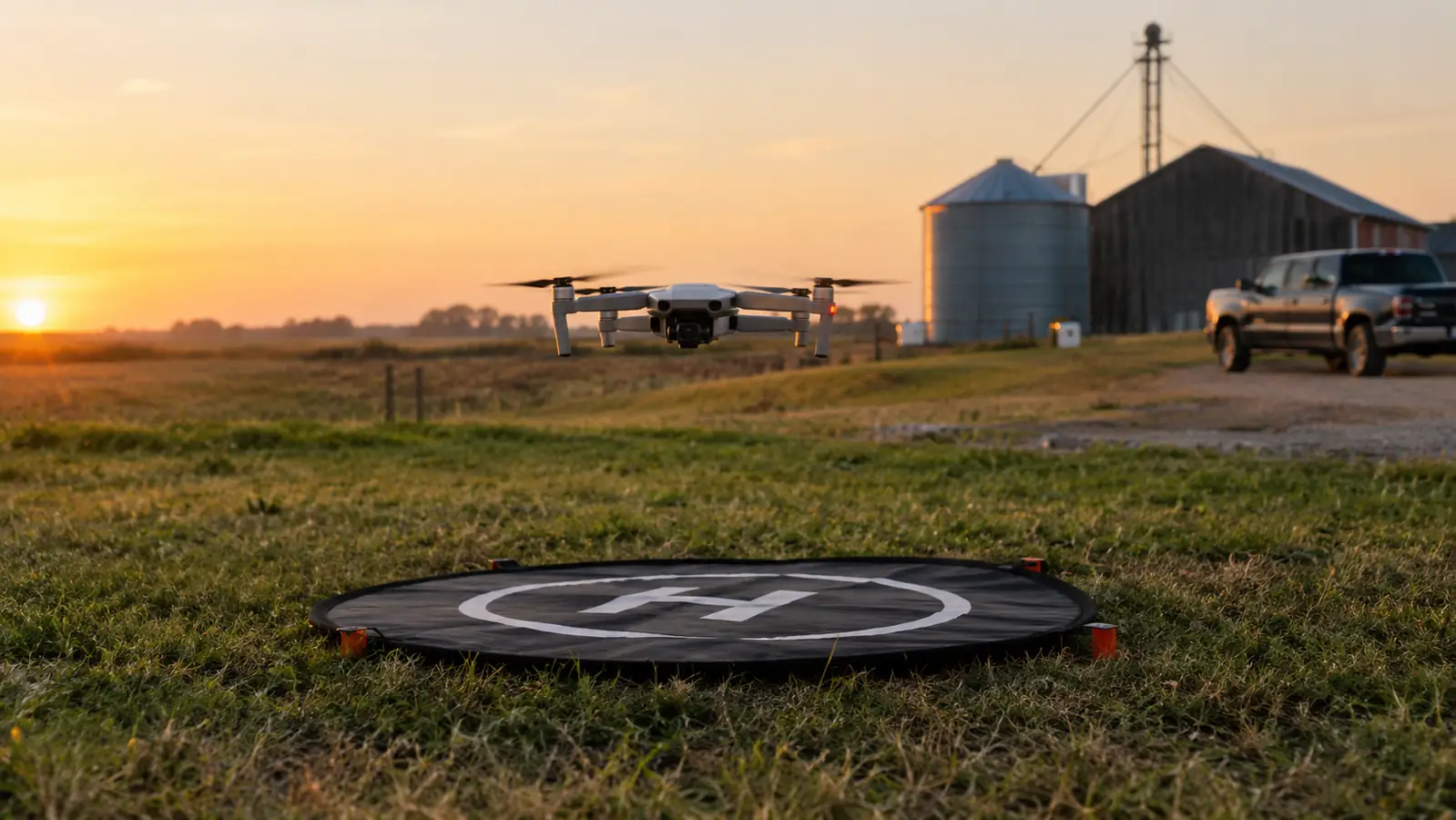
I bought the YINGJEE 22 inch landing pad at the same time I bought my DJI Mini 4 Pro, which puts it at about two years of regular use. That is not a long time in the life of a piece of gear, but it is long enough to learn what it actually does and what it does not. I have launched off this pad on cut farm grass, on gravel driveways, on packed dirt, and once on a sandy beach in north Idaho. I have flown in wind that made me pack up after one battery. I have folded it up wet and left it in the back of my truck for a week. So this is not a first-week review. This is what the pad looks like after the new wears off.
Here is the short version: the pad has held up better than I expected, it does the one job I bought it for, and the only real complaint I have is the thin stakes that come with it. Everything else is details, and most of those details are good.
The Quick Verdict
A simple, well-made pad that gives a drone a clean, level place to touch down. Two years in, mine is still flat, the stakes still hold, and I have not picked a piece of grass out of a gimbal since I started using it.
Amazon Check Today's Price →Two Years of Field Takeoffs and I Still Reach for It First
The YINGJEE pad is the cheapest insurance I carry for my Mini 4 Pro. It folds small enough to live in my JSVER hard case, and it has kept gravel, sand, and wet grass out of my gimbal for two full seasons.
Amazon Check Today's Price on Amazon →How I've Used It
Most of my flying happens on weekends, usually Saturday morning before the wind picks up or Sunday afternoon. I fly from a public park east of Spokane, from a couple of farm fields I have permission to use, and from lake shores in north Idaho when we drive over. That works out to maybe thirty to forty flights a year, and almost all of them start and end on this pad.
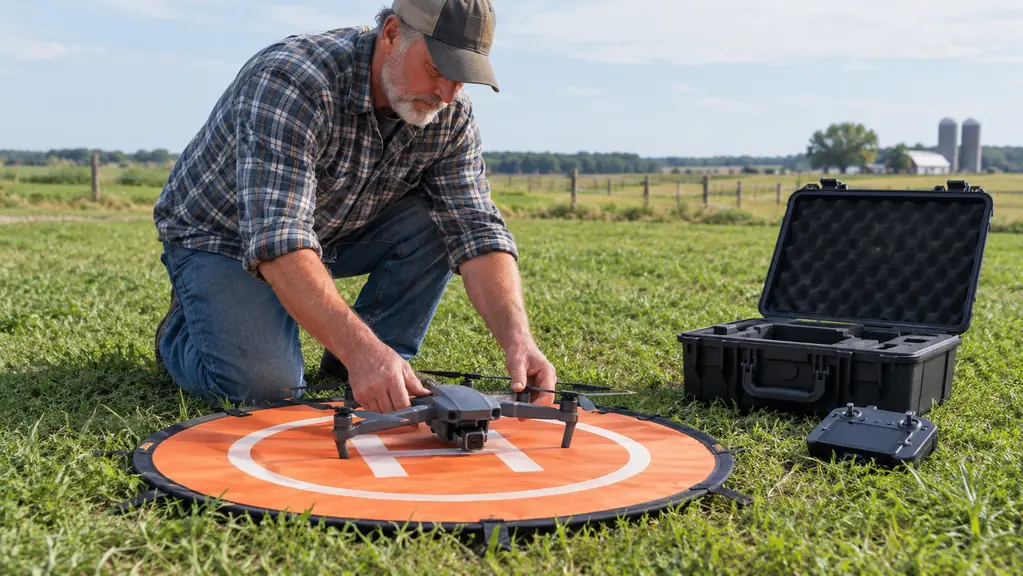
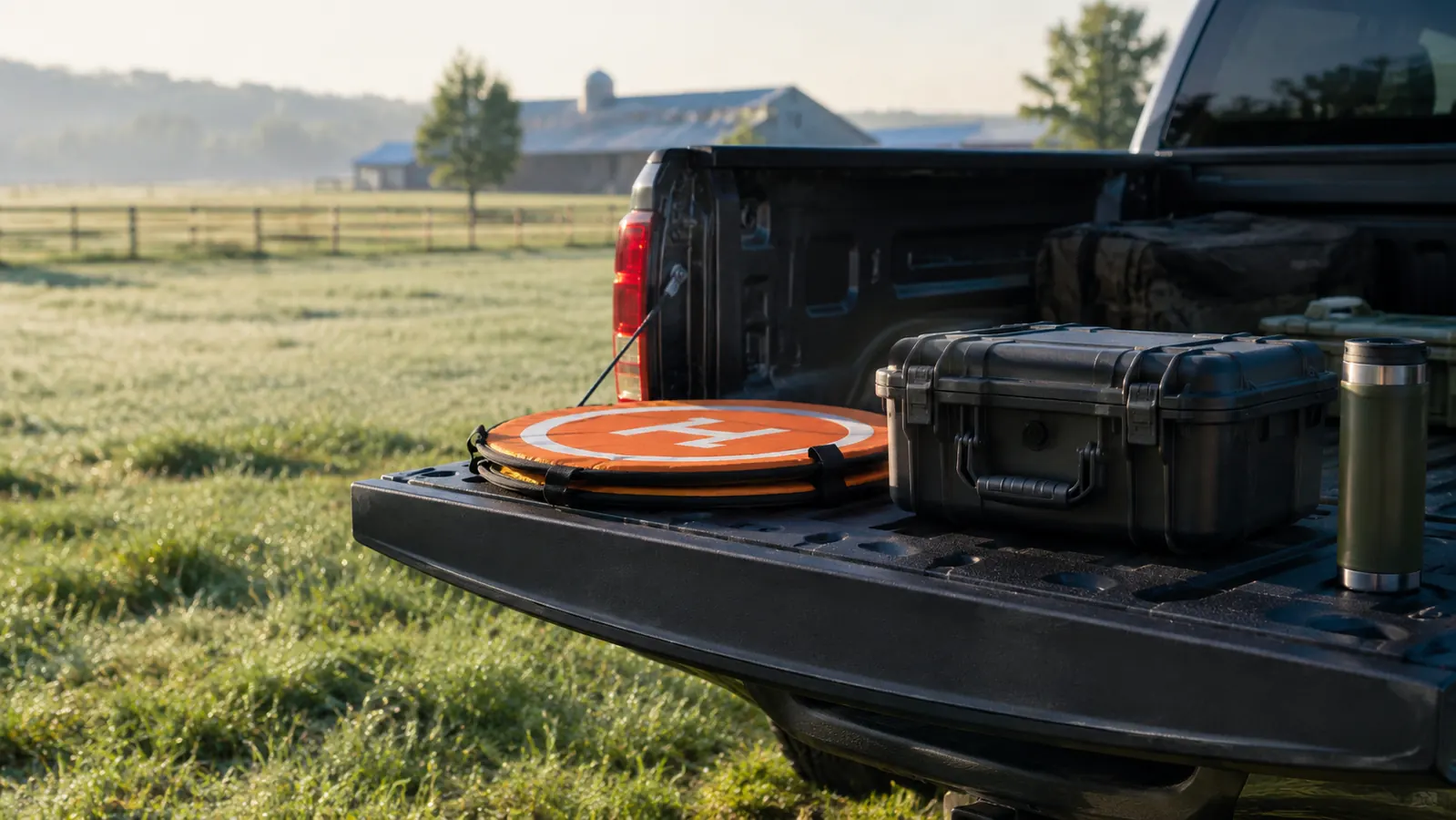
The routine is the same every time. I find a patch of ground that is reasonably level, spread the pad, and push the three stakes through the loops. On grass it takes about forty-five seconds. On gravel I usually skip the stakes and let the pad lie flat, because the gravel holds it. The whole thing weighs almost nothing and folds down to a disk about the size of a dinner plate, so it lives in the main compartment of my JSVER case next to the drone.
I have used it in temperatures from about fifteen degrees to about ninety-five. I have used it dry and I have used it wet. The only time I did not use it was when I flew from a paved parking lot, and even then I put it down anyway, because I did not want to risk a blade strike on a loose stone.
Why I Bought the Pad in the First Place
Before the pad, I launched the Mini 4 Pro straight off the grass. Most of the time it was fine. But grass is not a surface, it is a collection of individual blades, and every one of them is waiting to get sucked into a prop on takeoff. I lost a prop that way once with my old Mavic Air 2, and I spent an afternoon picking wet grass out of the gimbal after a damp morning flight. The pad removes that whole category of problem.
The other thing nobody mentions is dust. A Mini 4 Pro is light, and on a dry day the props kick up a surprising amount of dirt on a bare patch of ground. That dirt ends up in the gimbal, on the sensors, and in the vents. The pad gives the props a clean surface to bite into, and the drone sits above the dust instead of in it. If you fly from bare dirt, you already know exactly what I am talking about.
What I did not expect was how much the pad would change my takeoff routine. With a bare patch of ground, every takeoff is a new negotiation: is this spot level, is it clear of debris, is the grass wet. With the pad, the answer is always the same. I put the drone on the center mark, I start the motors, and I go. That consistency is worth more than the pad cost, and if you are on the fence about whether a pad is worth carrying, that consistency is the reason.
What Two Years Did to the YINGJEE Pad
The honest answer is: not much. The fabric is some kind of coated nylon that has held up better than I expected. It has been walked on, stood on, and once driven over by a golf cart when I left it on the ground while I fetched a battery. There is a scuff on one edge and a small crease where it folds, but no tears, no fraying, and the printed markings on the surface have not worn off.
The stakes are the weakest part of the kit. They are thin aluminum pins, and I have bent two of them over the years, one on hard ground and one when I stepped on it. They still work, and they are easy to replace, but if you fly on hard-packed ground, plan on the stakes bending eventually. The loops they go through are sewn tight and show no sign of pulling out.
The pad folds into itself and closes with a zipper. The zipper still runs smooth, which surprised me, because I have folded the pad wet more than once and left it closed up in the case. I do not recommend that. It came out smelling musty once, and I had to air it out. But the zipper itself has not failed, and the fabric has not delaminated anywhere.
In wind, the pad does what you expect: it wants to lift. The stakes handle that on grass. On hard surfaces where you cannot stake it, a pad this light will slide before it lifts, and I have had to chase it once. That is not a design flaw, it is physics. If you fly in wind on a hard surface, put something heavy on an edge or skip the pad altogether.
Where It Earns Its Spot in My Gear Bag
On cut grass, the pad is close to perfect. The drone has a clean, flat, dry surface, and the props never touch a blade. On dirt and packed gravel, it is just as good, because it keeps the drone out of the dust cloud that forms on takeoff. I have used it on a gravel driveway next to a farm field and come home with a clean gimbal every time.
The waterproof part is real. I have set it on soaked grass after a rain, and the top surface stayed dry enough that the drone did not pick up moisture. I have also set it on damp sand at a lake in north Idaho, and the sand stayed off the drone. That matters more than it sounds like, because sand in a gimbal is a day-ruiner.
One thing I did not expect to like as much as I do: the pad gives you a visual reference. When I land, I aim for the center marking, and it makes landings more consistent. It also marks the spot for other people, so nobody wanders into the landing zone while I am up. At the park, that has saved me more than once.
What I Would Change
If I could change one thing, it would be the stakes. The pad itself is close to perfect for what it is. The stakes are the only part that has failed me, and they failed because they are thin. I have thought about replacing them with tent stakes from the camping section, and I probably will before next season. It is an easy fix on a pad that otherwise shows no real wear.
The other thing I would change is my own habit of folding it wet. That is not the pad's fault. The fabric dries fast when you give it a chance, and the musty smell came from me sealing it in a case for a week. If you use this pad, give it ten minutes in the sun before you pack it, and it will last longer than you expect.
I would also like the center marking to be a little larger. On a bright day it is easy to see, but in low light I have to look for it. That is a small thing, and I have thought about adding a strip of reflective tape, but I have not done it because the pad works fine without it.
The Mistakes I Made So You Do Not Have To
The first time I used the pad on gravel, I did not stake it, and a gust lifted one edge and flipped it just as I was starting the motors. The drone was fine, but I had to reset the pad and wait for things to calm down. Now I always weight the edges on hard surfaces, even if it just means setting my controller case on one corner.
I folded the pad wet after a morning flight and left it in the case for a week. It came out musty, and I had to wash it and dry it in the sun. It is fine now, but I learned to shake the water off and let it dry before it goes in the case. That is the single piece of maintenance this thing needs.
Dirt builds up on the pad over time, and dirt on the pad ends up on the drone. A quick wipe with a damp rag every few months keeps the surface clean. I do this now when I do my regular prop check, and it takes about a minute.
What I Liked
- Gives the drone a clean, level, predictable surface on grass, dirt, and gravel
- Folds flat and small enough to live in a hard case
- Waterproof top keeps wet grass and damp sand off the drone
- Stakes hold well on soft ground, even in gusty wind
- Center marking makes takeoffs and landings more consistent
- Simple construction that has survived two years of weekend use
Where It Falls Short
- Thin aluminum stakes bend on hard ground
- Light enough to slide or flip in wind if you cannot stake it
- Fabric picks up dirt and needs an occasional wipe
- 22 inch size is snug for larger drones with wide prop guards
Two years in, the pad is still flat, the stakes still hold, and I have not picked a piece of grass out of a gimbal since the day I started using it.
Who This Is For
The pad is for anyone who flies from grass, dirt, or gravel and wants their drone to come down clean. If you fly from a paved driveway or a designated helipad, you may not need it. But if you fly from a park, a farm field, a trailhead, or a beach, this is the cheapest way to keep sand and grass out of your gimbal. It is also a good buy for people who fly infrequently, because it takes up almost no room and costs very little compared to the drone it protects.
Who Should Skip It
If you only ever fly from pavement or from a tabletop, the pad is dead weight. If you fly a larger drone with a wide wheelbase, the 22 inch surface may be tight, and you would want the next size up. And if you fly in wind on hard surfaces where you cannot stake the pad down, you will spend more time chasing it than you save. For those cases, a heavier pad or a different approach makes more sense.
The pad also will not save you from pilot error. It does not make you a better pilot, it does not protect your drone if you fly into a tree, and it does nothing for a battery that dies mid-flight. I have put a drone into a pine tree before, and no landing pad on the ground would have helped. The pad solves one specific problem: the moment of takeoff and landing on uneven or dirty ground. That is the whole job, and I do not expect more from it.
It also does not stop the drone from tipping over in a hard landing. The surface is firm, which is good for consistency, but it is not a cushion. If you come down sideways, the drone will tip, same as it would on a table. I have had one hard landing on the pad, and the pad did not make it worse, which is about all you can ask.
Still the First Thing I Pack After the Drone
Two years, thirty-plus flights, and one bent stake. The YINGJEE pad has earned its spot in my JSVER case. If you fly from grass or dirt, it will earn its spot in yours.
Amazon Check Today's Price on Amazon →