For the four years I flew my old Mavic Air 2, it rode in a soft shoulder bag. It was convenient, it fit a tablet and a water bottle, and it was easy to sling on for a walk. Then a sliding toolbox in my work truck crushed the bag flat, and when I bought my Mini 4 Pro about two years ago, I went straight to a hard shell. The JSVER hard case is what I landed on, and it has carried the Mini ever since. If you are trying to decide between a hard case and a soft drone backpack, here is how I think about it.
The day the bag died, I had left it on the floor of the back seat, and when I braked harder than I meant to at a light, the toolbox slid forward and pinned the bag against the seat frame. I did not notice until I got to the field and unzipped it. The drone survived, but the bag was flattened, and the zipper track was bent badly enough that it never closed right again. That is when I started looking at hard cases, and that is the moment I would point to if you ask why I lean the way I do.
Short answer: if you mostly fly from the back of a vehicle or a short walk from it, get the JSVER hard case. If you hike miles to a launch spot and want room for a jacket, batteries, and a tablet, a backpack is easier to live with. The hard case protects better, the backpack carries better. They are different tools, and I have owned both.
| JSVER Hard Case | Soft Drone Backpack | |
|---|---|---|
| Protection | Rigid EVA shell and foam cutouts that hold the drone, controller, and batteries in place; shrugs off a toolbox sliding into it | Padded fabric that guards against bumps but crushes flat under real weight |
| Pack space | Everything has a cutout, and there is not much room left after the Fly More kit is inside | Main compartment swallows the drone plus a jacket, tablet, water bottle, and spare props |
| Everyday carry | A rigid case with a handle and shoulder strap; fine for short walks, awkward on a long hike | Padded straps and a hip belt make miles of hiking genuinely comfortable |
| Setup speed | Open the lid and the drone is right there in its cutout, ready in seconds | You dig the drone out from under a jacket and tetris it back in when you are done |
| Weight | About two pounds empty, and the shell does not compress | Lighter fabric shell, but the extra gear you pack makes the total weight whatever you decide to carry |
| Best for | Drivers, trunk flyers, and anyone who has watched a bag get crushed | Hikers, cyclists, and pilots who need one bag for the whole outing |
Where the JSVER Hard Case Wins
The JSVER hard case wins on the one thing that made me buy it: protection. The shell is a rigid EVA plastic, and inside, the foam is cut to fit the Mini 4 Pro, the RC-N2 controller, and the batteries from the Fly More combo. Nothing rattles around. I keep mine in the back seat of my truck, under a jacket, and I do not think twice about a cooler sliding against it on the way to the lake. The bag it replaced died under a sliding toolbox, and I have no interest in testing how much weight this case can take, but I have bumped it, dropped it off the tailgate, and sat a gas can on it without any damage to the drone.
The case is about a foot long, nine inches wide, and five inches deep, roughly the size of a thick hardcover book, and it weighs a bit under two pounds empty. The top layer of foam lifts out, and underneath there is a mesh pocket that I use for the spare propellers and the USB-C cable. The drone sits in its cutout with the gimbal guard on, and the controller has its own slot shaped for the RC-N2, so the phone clip does not press against anything when the lid is closed. I have flown with the RC-N2 and my iPad mini on the Hanatora tablet holder, and at the end of the day the controller still goes back in its slot without a fight.
The test that sold me happened about a month in. I was loading the truck for a trip to a lake in north Idaho, and I set the case on the tailgate while I went back inside for a jacket. When I came out, I caught the edge of the case with my hip and it hit the gravel hard enough to bounce. I opened it right there, fully expecting a cracked gimbal or a popped arm. The drone was exactly where it had been, and the foam had absorbed the whole thing. With the old backpack, that same drop would have been the drone taking the impact through a thin layer of fabric. I have dropped it twice since then, once off the tailgate and once off a picnic table, and I have stopped flinching.
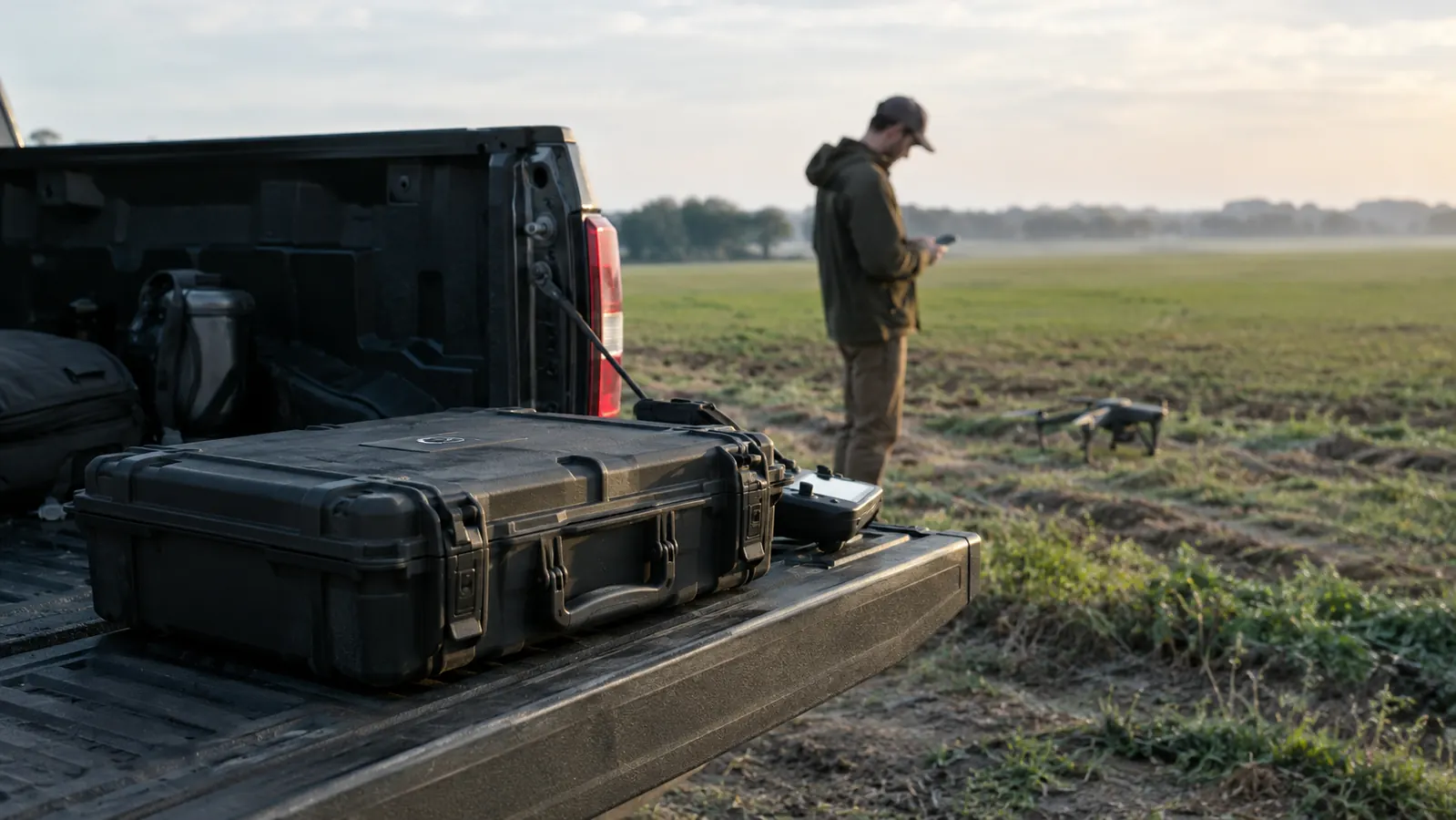
It is also faster at the field. With the backpack, I unzipped the top, moved the tablet out of the way, lifted the drone out, and then had to arrange everything again before the walk back. With the JSVER case, I set it on the tailgate, open the lid, and the drone is sitting right there in its cutout. The controller is next to it, the batteries are in their own foam slots, and I am airborne while the backpack crowd is still digging for a prop. Most of my flying happens on a Saturday morning or a weekday evening, but there have been plenty of lunch breaks where I drove ten minutes to the park east of town, flew two batteries, and drove back. On those days the case saves me maybe five minutes total, and five minutes is the difference between flying and not flying when you are on a clock.
The hard case that has survived two years in my work truck
The JSVER hard case holds the Mini 4 Pro, the RC-N2 controller, and the Fly More batteries in custom foam cutouts. It is the case I grab when I am driving to a field, and it has taken every bump I have thrown at it.
Amazon Check Today's Price on Amazon →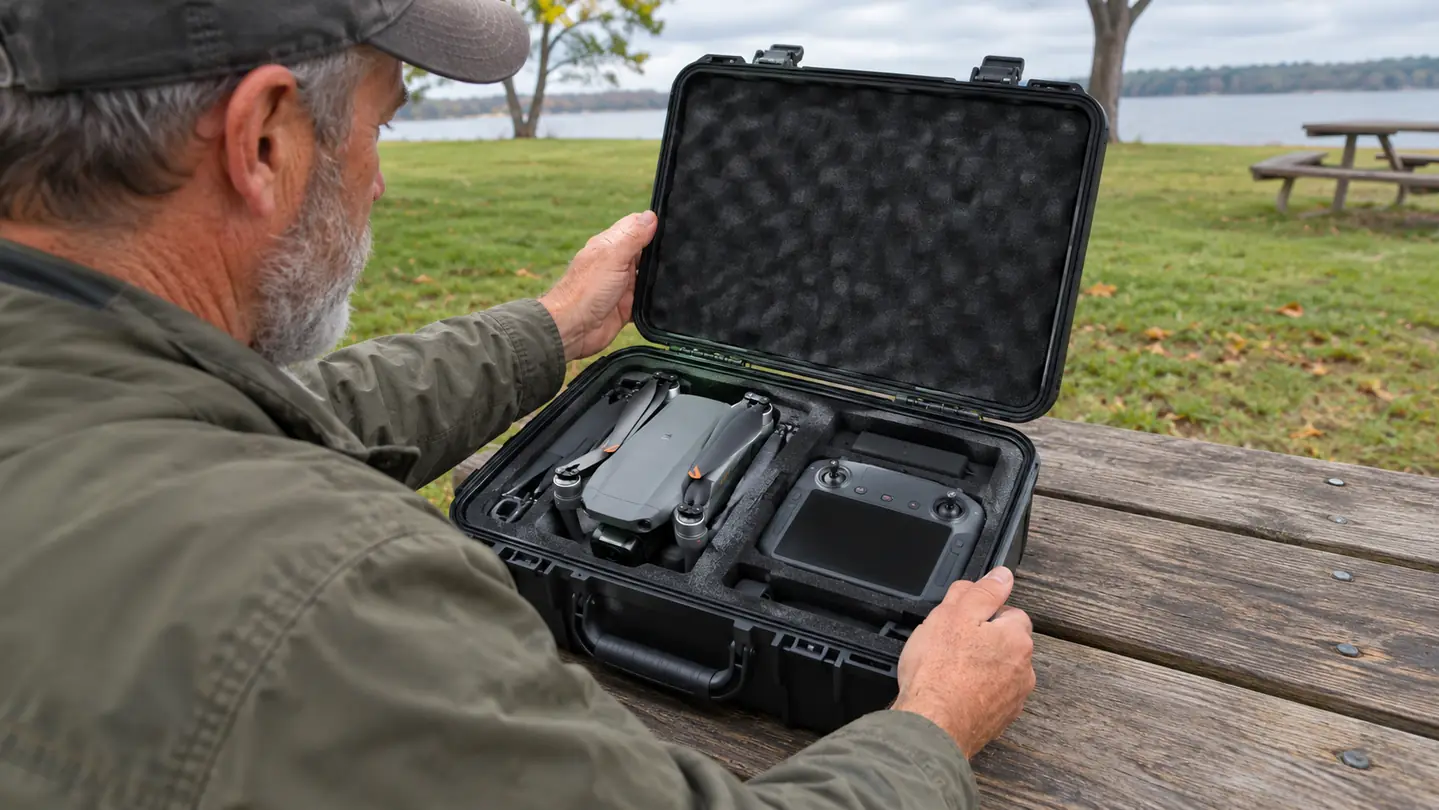
Where the Backpack Wins
I am not going to pretend the backpack lost every argument, because it did not. Back when I flew the Mavic Air 2, I hiked a mile into the Palouse with the drone, a tablet, a water bottle, and a light jacket all in one soft bag, and it carried all of it comfortably. The JSVER case has a handle and a shoulder strap, but it is a rigid box, and it swings against your hip on a long walk. If your flying spot is a mile up a trail, the backpack is the better carry. I know people who keep the JSVER case in the truck for the drive, then transfer the drone to a small backpack for the hike. That is a reasonable system, even if it means owning two things.
The hike that made me keep the backpack was a Saturday in late September. I parked at the bottom of a county road and walked about a mile and a half up to a ridgeline that looks out over the Palouse. The backpack carried the Mini 4 Pro, my iPad mini, a water bottle, a fleece, and a sandwich, and I did not feel any of it until the last quarter mile. The JSVER case would have made that same hike miserable. It is not heavy, but it is a rigid shell, and it does not conform to your back the way padded straps do. I have tried carrying it with the shoulder strap on that same route, and it swung and bumped the whole way.
The backpack also wins on total space. Once the Fly More combo is in the JSVER case, the foam is full. There is no spot for a tablet, a filter case, or a snack. The backpack swallowed all of that and still had room for a spare set of props. When I drove to a lake in north Idaho for an evening flight, the backpack was the better bag for the trip, because it carried the drone plus everything else I needed for the day. The lake trip was a Thursday evening in July. I threw the backpack in the truck with a camp chair, a cooler, and the NEEWER filter case, and when I got to the water I had everything in one trip from the parking lot. The JSVER case would have meant a second trip or a third hand.
The tradeoff showed up on the way home. I set the backpack down on the gravel to tie my boots, and I spent the whole time watching it out of the corner of my eye. Nothing happened, but I remember thinking that the hard case would not have needed watching. That is the honest summary of the backpack: it carries more, it carries it more comfortably, and it asks you to trust a layer of padded fabric with the most expensive thing you own. Most of the time that trust is fine. It only fails when something heavy lands on the bag, and I have already had that happen once.
Who Should Buy Which
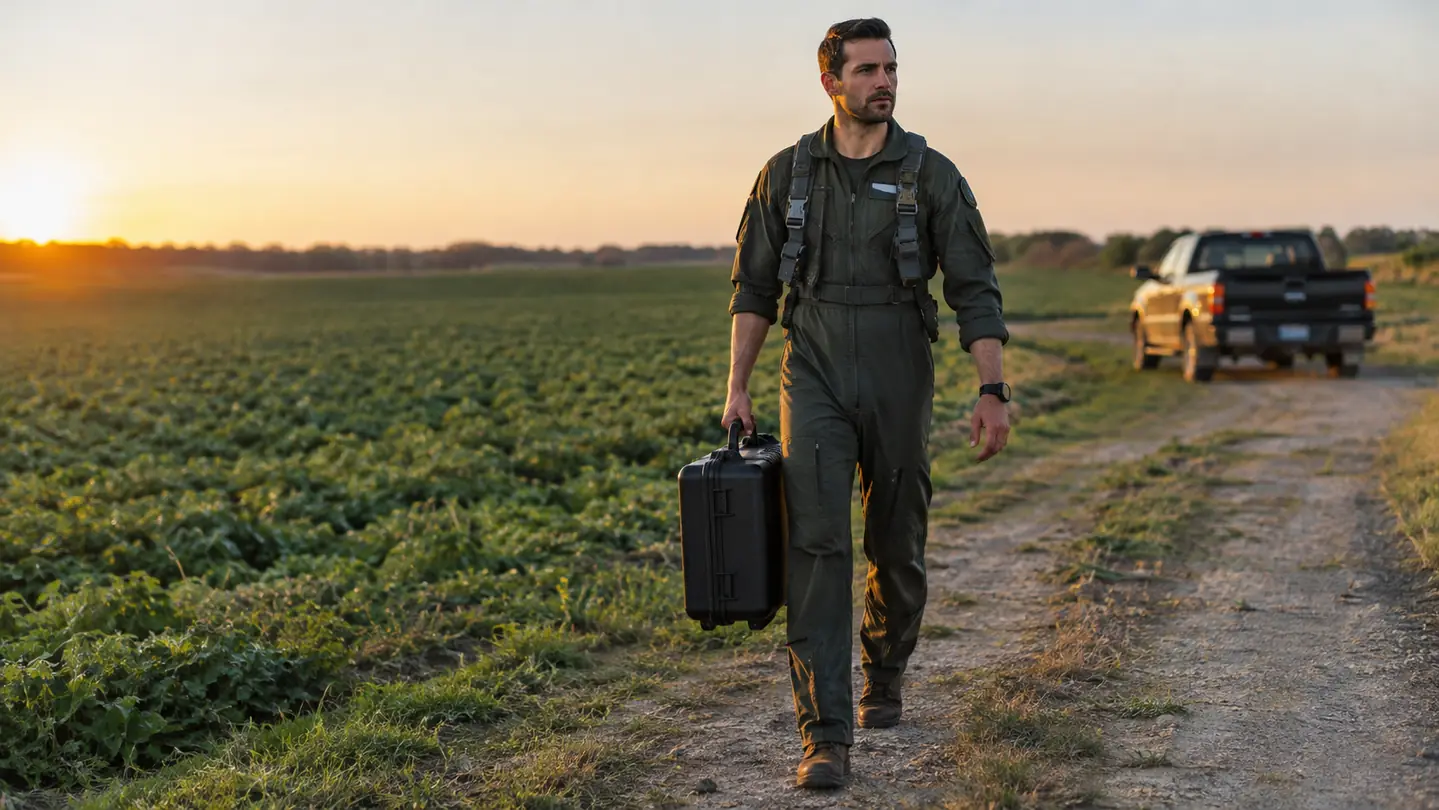
Buy the JSVER hard case if you fly from your vehicle, a picnic table, or anywhere within a short walk of where you parked. Buy it if you have ever watched a soft bag get crushed, or if you want to grab one case and know the drone, controller, and batteries are all in their exact spots. Buy it if you want the drone to survive the trunk, the back seat, and the tailgate, because that is what it is built for.
I fit that description exactly. My flying is ninety percent from the tailgate of my truck at a farm field east of town, or from a picnic table at the park. The JSVER case sits on the passenger seat or the back seat, and it has never once been in the way. It takes up less room than the backpack did, because the backpack was always half full of stuff I did not need at the field. The case is a fixed size, and that fixed size is a feature: I know exactly what is in it, and I know exactly where it goes in the truck. I grab it on the way out the door the same way I grab my lunchbox.
Buy the backpack if you hike to your launch spots, if you fly while traveling and want one bag for the drone plus your other stuff, or if you simply hate carrying a rigid box by hand. And if you do both, there is no rule that says you can only own one. The JSVER case lives in my truck, and on the rare long hike I still reach for a backpack. Most weekends, though, the case is what comes with me, and it has earned its spot.
The way I would put it to a friend: if I could only keep one, I would keep the JSVER case, because it protects the drone and the drone is the expensive part. A backpack is a convenience, and convenience is easier to replace than a gimbal. But I would not blame anyone who made the opposite call. If your flying is a two-mile hike with a camera bag and a lunch, the backpack is the right tool, and the hard case is the wrong one. The right answer depends on where you fly, not on which bag looks better in the product photos.
Still deciding? Start with the case that protects the drone
The JSVER hard case is the safer default for most pilots, especially if you drive to your flying spots. It holds the Mini 4 Pro, the RC-N2 controller, and the Fly More batteries in custom foam, and it takes up less space in the truck than a backpack full of extras.
Amazon Check Today's Price on Amazon →