
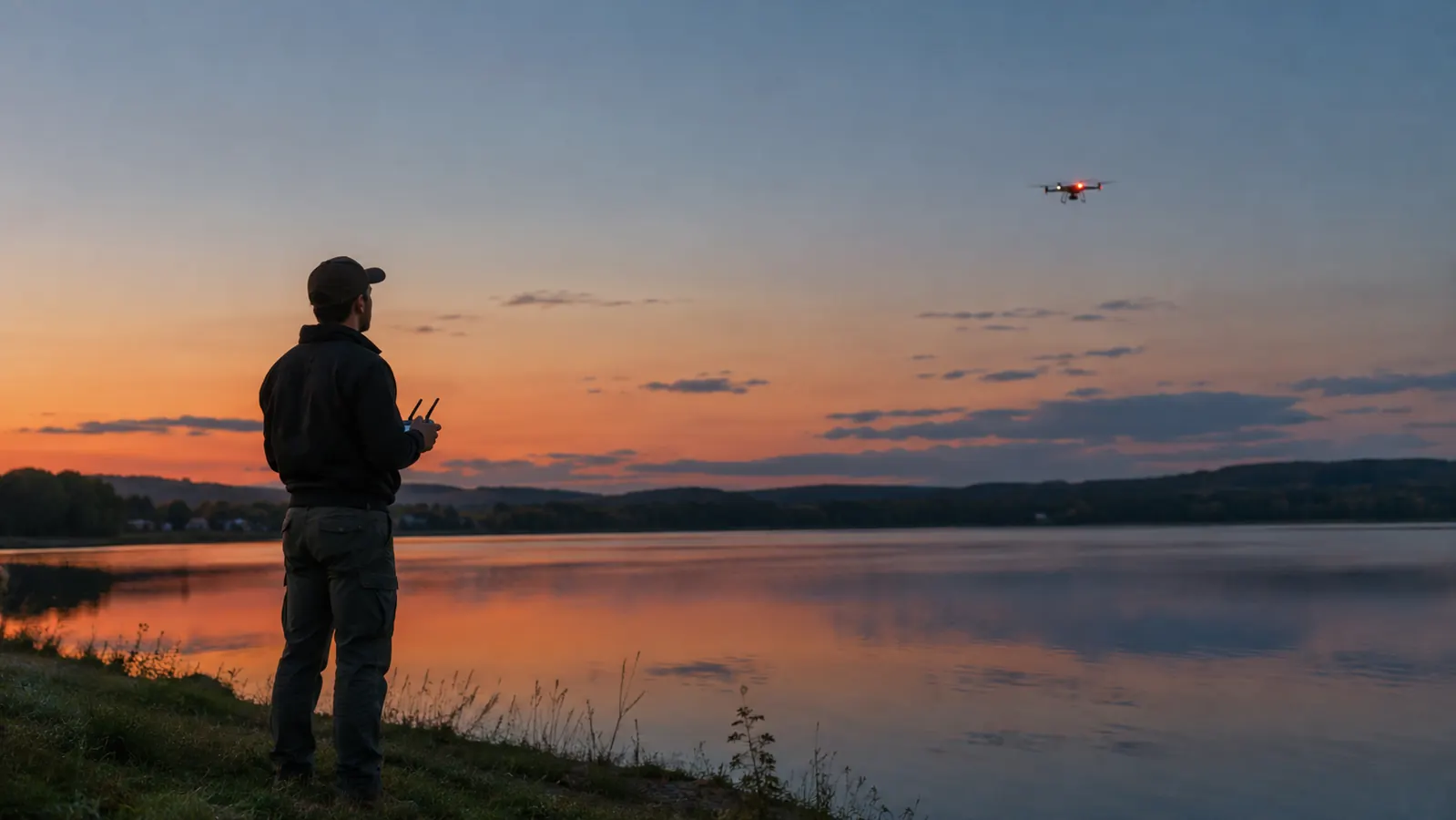
It was a Tuesday in late September, and I had driven the twenty minutes from Spokane to a small lake in north Idaho because the wind had finally died. My wife Tara had asked if I was really going to fly that late, and I told her I would be back before dark. I was wrong about that, and it is a good thing I was.
I have flown camera drones as a hobby for about six years, mostly on weekends. My current drone is a DJI Mini 4 Pro I bought about two years ago, and I fly it with the standard RC-N2 controller, these days with an iPad mini mounted on top. I know the rules about keeping visual line of sight. I also know how easy it is to convince yourself that a speck against gray water is still something you can see.
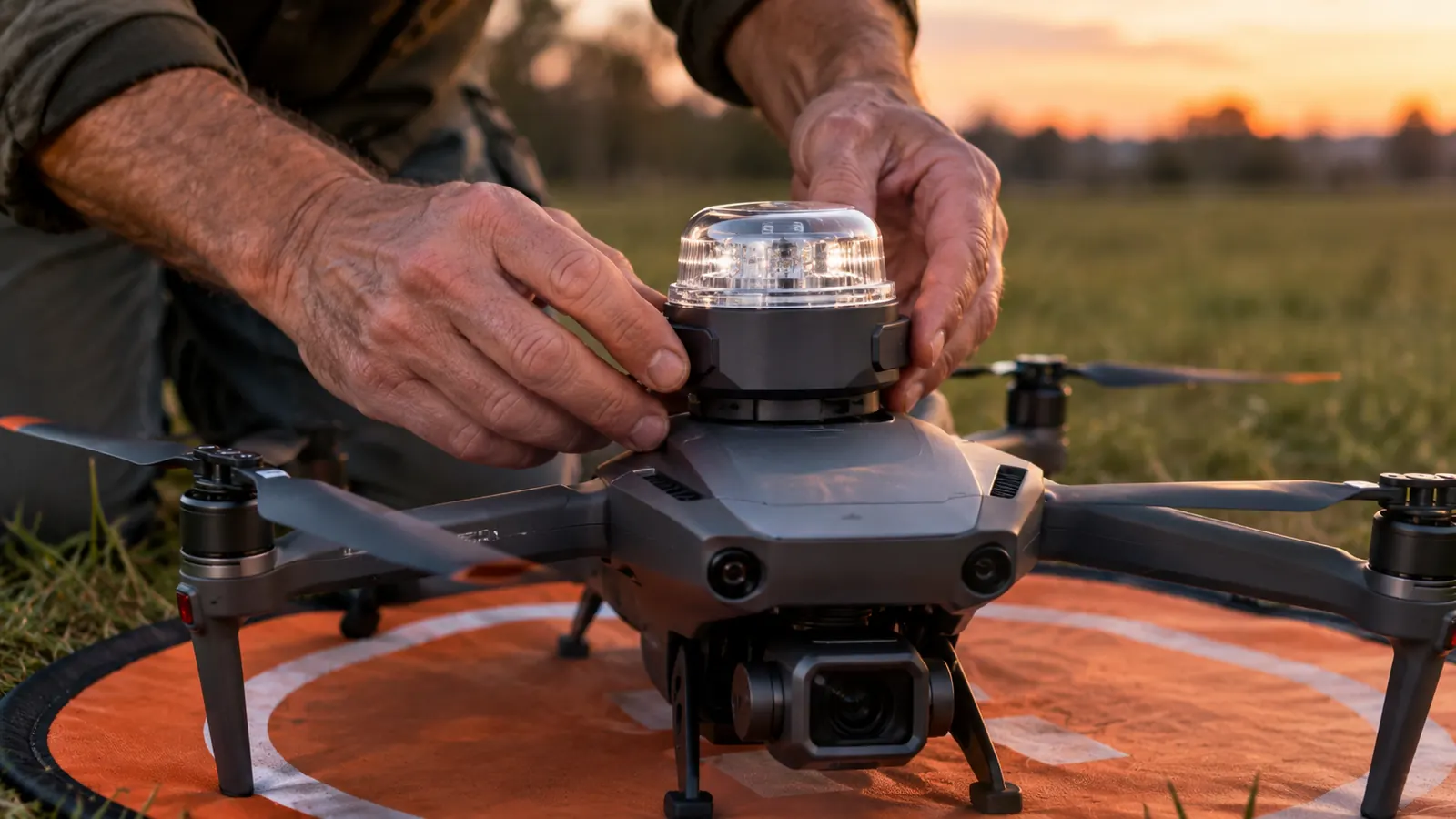
That evening I had the VIFLY strobe on top of the drone, the little FAA-compliant anti-collision light that I had bought about eighteen months earlier for twilight flights. It weighs almost nothing, it clips on with a twist, and it blinks a bright white light that you can see from a surprising distance. I had put it on out of habit, the same way I grab a jacket on the way out the door.
I launched from the boat ramp, flew out over the water to frame the treeline, and got some footage I was happy with. Then the sun dropped behind the ridge and the lake went from silver to gray in about four minutes. I looked up and the drone was gone. Not lost in the sense of a flyaway. Just gone from my eyes, a small dark shape that had blended into a darkening sky. I knew where it was on the map, and I knew the altitude, but I could not see it, and the rules are clear that I am not supposed to fly what I cannot see.
I brought it back toward me and it was still invisible. Then the strobe caught the angle right and I saw it, a single blinking point of light maybe six hundred feet out, coming home. I landed it on the pad, packed it into the JSVER hard case, and sat on the tailgate for a minute. I had been one bad decision away from a very different ending.
The drone was invisible until the strobe caught the angle, and then it was a single blinking point of light coming home.
The strobe I keep on the drone for every twilight flight
The VIFLY strobe is the small FAA-compliant anti-collision light I have used for about eighteen months. It clips on top of the drone, adds almost no weight, and makes the aircraft visible against dusk, haze, and gray water.
Amazon Check Today's Price on Amazon →The next evening I went back to the same lake and I did something I had not done in a while. I waited until the sun was fully down and the water was almost black, and I flew anyway. Not far, not high, just out over the lake to the same treeline, because I wanted to know whether the strobe would hold up when there was nothing left of the daylight to help it.
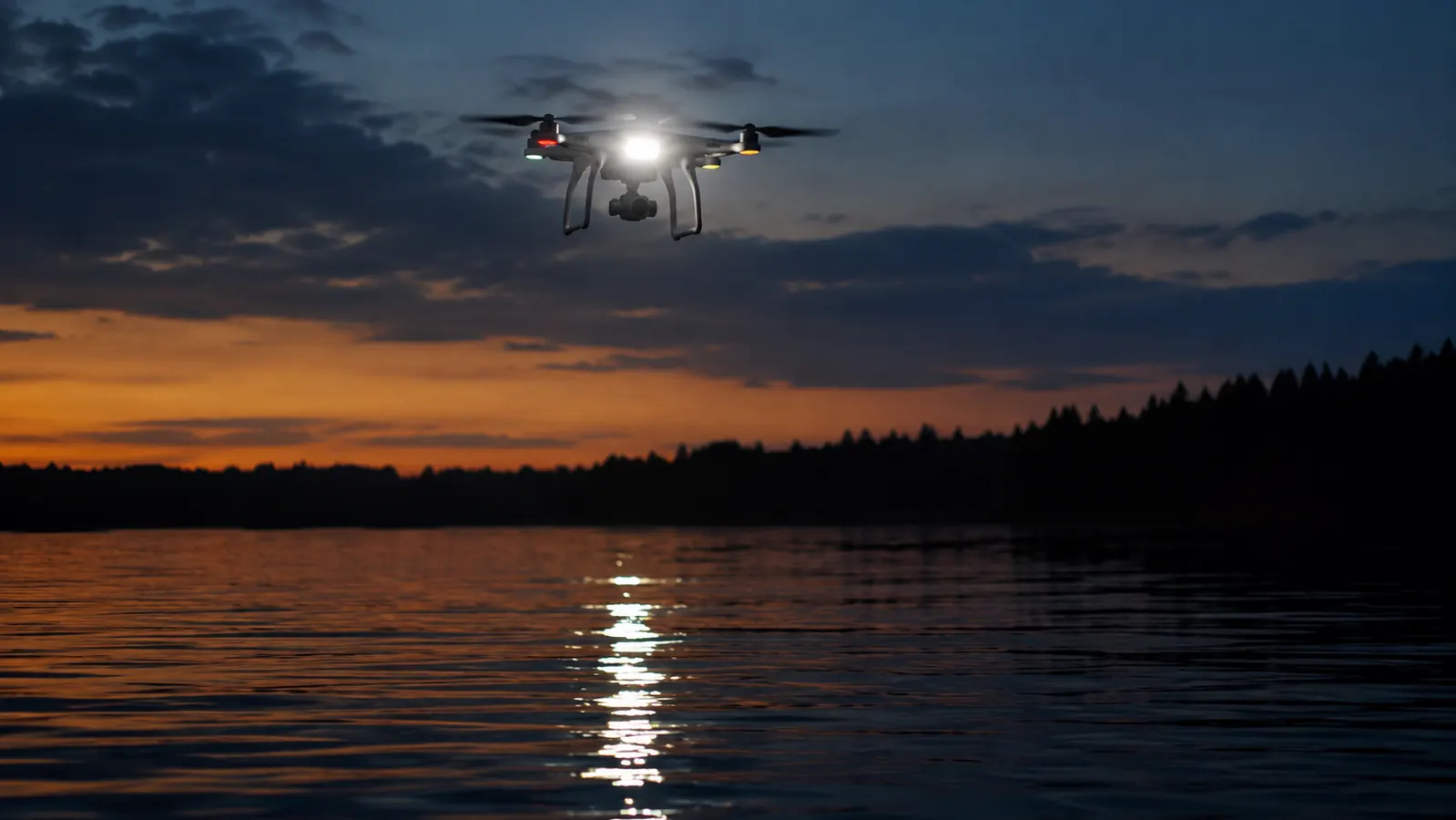
It did. From the boat ramp, the VIFLY strobe was visible as a clear blinking light far past the distance where I would normally have turned around. I could track the drone through the whole flight, not because I could see the drone, but because I could see the light. That is the whole job of an anti-collision strobe, and it does that job without drama.
I have since flown most of my evening sessions with the VIFLY on top of the Mini 4 Pro. It has been through a few hundred flights, a hard landing on gravel, and a rain scare that turned out to be nothing. The battery still lasts longer than my controller battery, and the mount has not worn loose. It is the kind of gear that quietly does its job and then you forget it is there, until the evening you need it and it is exactly where you left it.
I will not pretend the strobe makes night flying safe in any conditions, because it does not. You still need to know the rules, keep the drone close enough to control, and use your judgment about wind and battery. What the VIFLY does is close the gap between what the regulations ask of you and what your eyes can actually deliver at dusk.
I also keep the VIFLY on the drone during the day more often than not. The strobe is bright enough to help in bright sun over snow or pale fields, where a white drone can disappear against the ground. It is not a replacement for good habits, but it is a cheap layer of protection that sits on top of them.
What I'd Tell You If We Were Sitting at My Kitchen Table
If you flew at dusk once and promised yourself you would not do it again, I would tell you that the answer is not to stop flying in the evening. It is to make yourself visible. A small strobe like the VIFLY costs about the same as a couple of batteries, weighs less than a pack of gum, and turns an invisible drone into a light you can track with your eyes. I would also tell you to respect the battery, respect the wind, and never let a blinking light talk you into a flight you should not take. The light is a tool, not a permission slip. But for the evenings when the conditions are right and the light is fading, I would not fly without it.
Make your drone visible before you need it to be
The VIFLY strobe is the anti-collision light I keep on my drone for evening flights. Small, bright, and simple to mount.
Amazon Check Today's Price on Amazon →