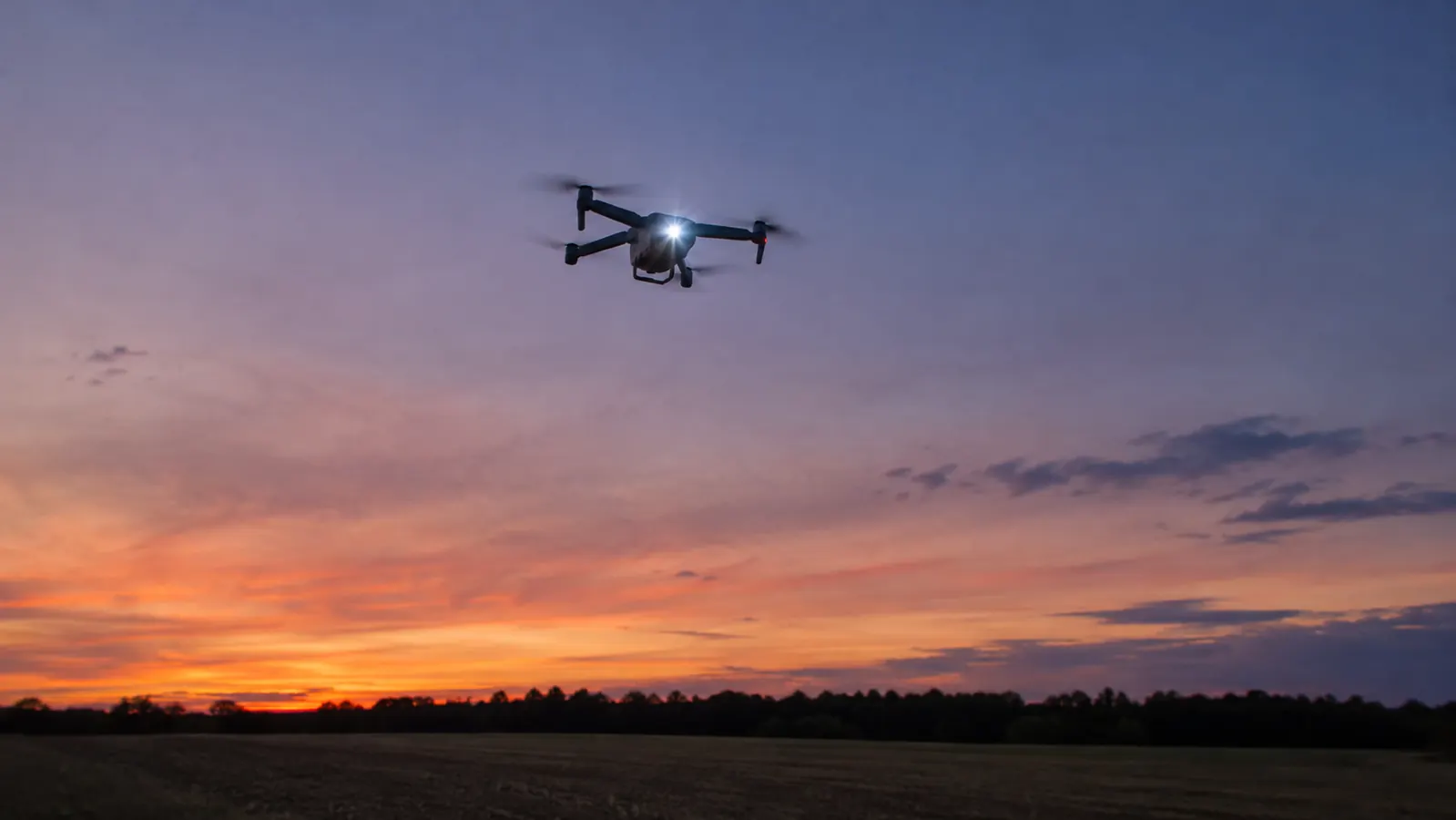
Twilight is the best time to fly around here, and it's also the one time I actually worry about the drone. The light goes flat fast, the hills go dark, and a Mini 4 Pro against a treeline just disappears. I bought the VIFLY strobe about eighteen months ago for evening flights over the Palouse and the lakes up in north Idaho, and it has been on the drone for most of them. This is the long version of how that went, including the parts where I got it wrong.
Quick background for anyone new to strobes. A drone strobe is a bright blinking light you mount on the airframe so other people can see you and you can see the drone. The VIFLY is a small anti-collision strobe, FAA-compliant, which matters if you fly under Part 107 or just want to be a decent neighbor to the other pilots at the park. It weighs almost nothing, it clips or sticks to the drone, and it blinks. That's the whole pitch, and it's a good one, but the details are where a product like this earns its keep or doesn't.
The Quick Verdict
Eighteen months in, it still does the one job I bought it for: keeping the Mini 4 Pro visible at dusk. The battery has held up, the mount has held up, and I'd buy the same one again without shopping around.
Amazon Check Today's Price →The Same Strobe I've Flown for Eighteen Months
If you fly at dusk and you've lost sight of your drone against a dark treeline, this is the fix. It's small, it's bright, and it's been on my Mini 4 Pro for a year and a half without giving me a reason to take it off.
Amazon Check Today's Price on Amazon →How I've Used It
I fly a DJI Mini 4 Pro with the screen-less RC-N2 controller, so my phone is my display and my eyes are my FPV feed. On weekends I drive east of Spokane to the farm fields or the park, and in the summer I take the drone up to the lakes in north Idaho. The strobe goes on the bottom of the Mini using the bracket that came in the box, and it stays there. I don't take it off for daytime flights, because the drone flies the same with it on.
Most of my flights are at dusk. That's when the light is worth filming and when the wind usually lies down, but it's also when the drone gets hard to see. With the strobe on, I can hold the Mini in sight well past the distance where the bare airframe disappears. That's not a marketing claim, it's what I do every weekend from spring through fall.
I've flown it in cold, in heat, in wind, and in one light rain that I should have ended sooner. The strobe has been through all of it. The only time it gave me trouble was the week I left it on in the case and killed the battery, which is a me problem, not a product problem.
One thing I changed early on: I stopped taking it off between flights. At first I treated the strobe like a special-occasion accessory and only mounted it for twilight sessions. Then I realized the drone flies exactly the same with it on, and a strobe you have to install is a strobe you'll forget. Now it lives on the airframe, and the only time it comes off is when the Mini goes in the hard case for a trip.
What It Looks Like From the Ground
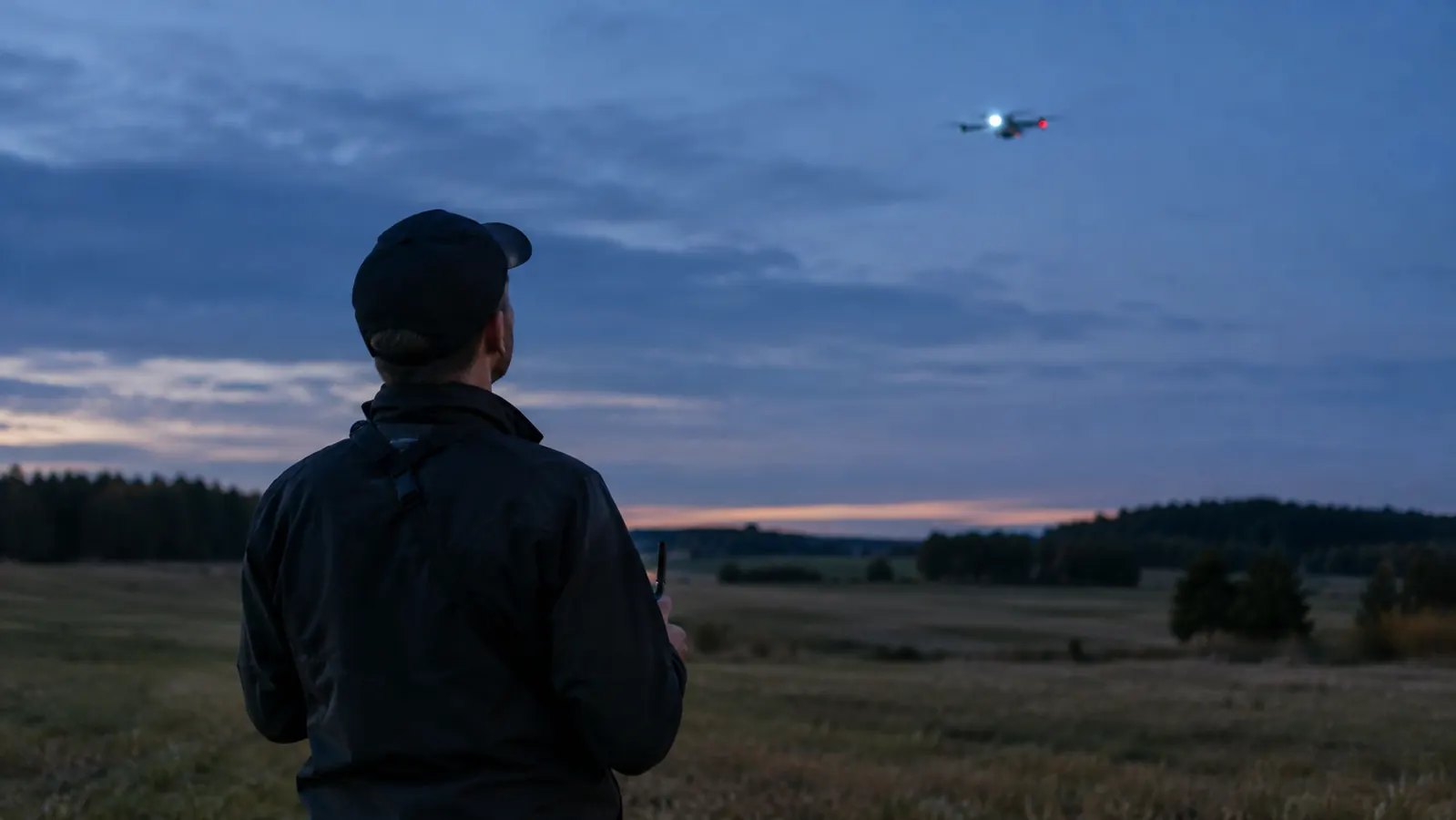
The whole job of this thing is to be seen, so let's start there. At dusk, with the strobe on, I can keep the Mini 4 Pro in sight at distances where the drone itself is a gray smudge. The blink is what does it. A steady light gets lost in the sky, but a blinking one catches your eye and your eye stays on it. I've had other pilots at the park tell me they spotted my drone before they spotted me, which is exactly what you want when someone else is flying a larger rig nearby.
The practical number: on a clear evening I can hold the strobe in sight out to the point where I'm already thinking about bringing the drone back for battery. That's roughly the whole legal and sensible range of the Mini 4 Pro anyway. So the strobe doesn't extend how far I fly. It extends how confidently I fly the range I already use, and that's the more valuable thing.
Over water it matters even more. Up at the lake, a drone against dark water at dusk is invisible, full stop. With the strobe on, I could track it down to the deck and back up without guessing where it was. That one evening paid for the thing, and I've had a dozen evenings like it since.
One more example from the hills. The Palouse in late summer is all gold and shadow at dusk, and a small drone against that is nearly impossible to track. With the strobe, I could follow the light across the field and keep my eyes up instead of staring at the screen. That's the real win. The strobe lets me fly like a pilot instead of a person watching a phone.
Battery Life After Eighteen Months
The strobe has its own little battery, charged by a USB cable, and it lasts a long time. When it was new I got several evenings of flying out of a single charge. Eighteen months later, that's still basically true. I charge it maybe once every two or three weekends, and I have never had it die mid-flight.
I should be specific, because this is the claim people are right to be skeptical about. My typical dusk session is three batteries through the Mini, which works out to roughly forty-five minutes of flight time, plus setup and landing. The strobe runs for the whole session and keeps running. I've also left it blinking on the table while I packed up, forgotten about it, and found it still blinking an hour later.
The one thing I'd warn about: the light doesn't turn itself off, or at least mine doesn't. If you toss the drone in your case with the strobe on, you'll find a dead strobe next time. I did that once, early on, and now checking the strobe is part of my shutdown routine, right up there with taking the props off.
For charging, it's a standard USB cable, the same one I use for the controller, so I don't carry a special cord. A full charge takes about an hour, and I usually top it off the night before I plan to fly. It's the kind of product that disappears into your routine, which is the highest compliment I can give a piece of gear.
Mounting, or How I Almost Lost It
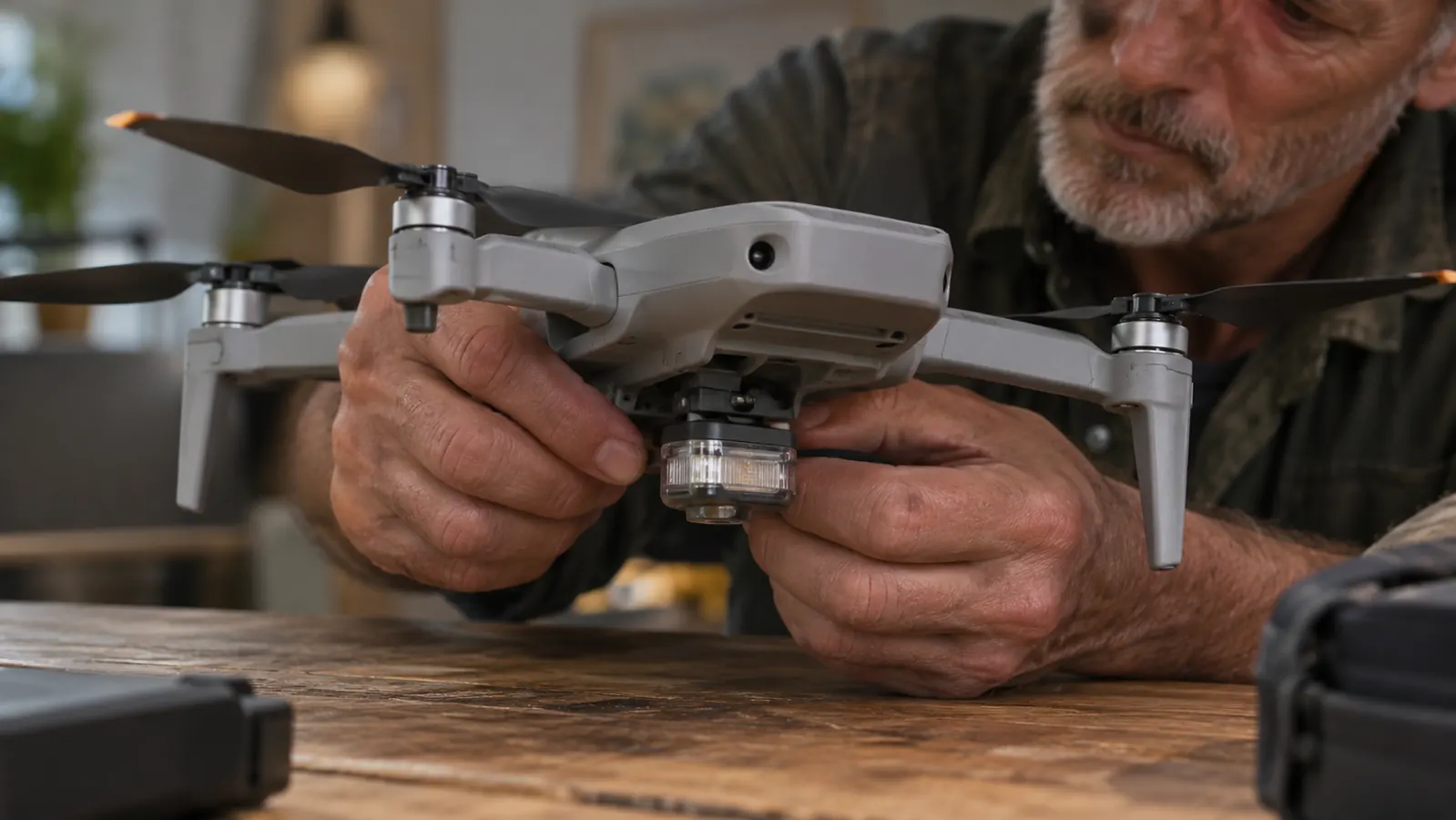
The VIFLY comes with a mounting bracket that fits between the drone and the battery, plus an adhesive pad if you want to stick it somewhere flat. On the Mini 4 Pro I use the bracket. It adds a step to battery changes, because you have to slide the strobe off to swap batteries, but it takes about three seconds and I got used to it fast.
The adhesive option is the one to be careful with. I tried the adhesive pad on a different spot early on, and it held fine in the air, but I didn't trust it after a hard landing on gravel. I went back to the bracket and haven't thought about it since. If you're the kind of person who likes gear locked down, use the bracket.
One honest gripe: the bracket is plastic and the strobe slides in and out of it. After a year and a half, the fit is a little looser than it was new. It has never come off in flight, but I check it before every launch now. For what the strobe costs, that's a fair trade, and I'd rather have a slightly loose bracket than a strobe that takes a tool to remove.
The Rules Part
The FAA requires anti-collision lighting for night flights, and while I'm mostly flying at dusk rather than full dark, having a compliant strobe means I don't have to think about where the line is. The VIFLY is marketed as FAA-compliant, and it blinks at a rate and brightness that fits the rule. I'm not a lawyer and this isn't legal advice, but it's the box I wanted checked.
The bigger rule is the one that isn't written down: see and avoid. A strobe doesn't let you fly where you couldn't fly before. It makes you visible to other pilots and to people on the ground, and it makes the drone easier for you to keep in sight. Both of those things make me a safer pilot, and I'll take safety any way I can get it.
It also helps at the park with the general public. When people can see the blinking light, they don't wander into your landing zone. That sounds small, but it has saved me from at least two close calls, and it makes the whole hobby look better to the people watching from the picnic tables.
One note on the legal side: rules change, and what's compliant today might not be tomorrow. I check the current guidance before I fly at night, and I'd tell anyone flying after dark to do the same. The strobe gets me most of the way there, but it doesn't replace reading the rules.
What I'd Change
No product gets a free pass, so here's the honest list. First, the strobe is bright enough to be seen but not bright enough to be a landing light. It won't help you see the ground, it helps other people see you. Don't buy it expecting to light up a landing zone, because that's a different tool for a different job.
Second, one strobe covers the drone from most angles, but not all of them. From directly above or directly below, the light is dimmer. If you fly a lot of overhead shots straight down, think about where you mount it. I keep mine on the bottom, which covers the angles I actually use, but a second strobe on top would be the complete answer.
Third, it's a single point of failure in the sense that if you forget to turn it on, it does nothing. There's no smart detection, no auto-on when the drone arms, no connection to the app. That's fine, it's a simple product, and simple is a feature. It just means you're the software, so build the habit.
What I Liked
- Visible at dusk at distances where the bare drone disappears
- Battery lasts multiple flights and has held up for eighteen months
- Small and light enough that I never notice it in flight
- Mounting bracket fits the Mini 4 Pro and takes seconds to swap
- FAA-compliant anti-collision light at a reasonable price
Where It Falls Short
- Plastic bracket gets slightly looser with use
- No auto-off, so you can kill the battery by leaving it on in the case
- Not a landing light, and not equally bright from every angle
- You still have to remember to switch it on before launch
Eighteen months in, the strobe still outlasts every battery I own. I've never had it die mid-flight, and I've never lost sight of the Mini 4 Pro at dusk with it on.
Who This Is For
Buy this if you fly at dusk, which is the best light of the day and the worst light for keeping sight of a small drone. Buy it if you fly over water, or near trees, or anywhere the drone can disappear against a dark background. Buy it if you fly where other people fly, because being seen is the cheapest insurance there is.
I'd also say buy it if you're new to twilight flying and you want to do it right from the start. It's a small, inexpensive piece of gear that removes the one thing that actually scares me about dusk flights: not knowing where the drone is. Everything else about the Mini 4 Pro I trust. The strobe covers the part I don't.
Who Should Skip It
If you only fly at noon in wide open fields and you never lose sight of the drone, you can skip it. If you're looking for a landing light, skip it, because that's not what this is. And if you want something that turns itself on and manages itself, skip it, because this is a manual product and you are the automation.
The honest version: this is a solution to a problem you only have some of the time. If that time never comes up for you, the money is better spent on batteries. For me, the time comes up every weekend from spring through fall, so it earns its spot in the case, and it has for eighteen months.
Still Flying With the Same Strobe
Eighteen months and a few hard landings later, this is the one accessory I'd replace with the exact same thing if it ever quit. If you fly at dusk, this is the fix, and it's a small one.
Amazon Check Today's Price on Amazon →