If you just bought a DJI Mini 4 Pro, the first thing somebody tells you is to get a hard case before the gimbal meets a door frame or a truck seat. What nobody tells you is that every case in this price range makes you trade something to get it. I bought the JSVER hard case the same week I bought the drone, mostly because it had hundreds of reviews and a rating that looked too good to argue with. Two years and a lot of farm field flights later, I can tell you what it does well, what annoys me, and why I have not switched to anything else. This is the review I wished I had read before I ordered.
Here is the honest version up front. The case is good. It is also bulkier than the listing photos suggest, the zipper needs two hands when it is new, and the foam does not hold the RC-N2 controller the way the pictures make it look. None of that made me send it back. All of it is worth knowing before you buy, because most of the reviews you will read are written on day one. This one is written after year two, and year two is where a case either proves itself or falls apart.
The Quick Verdict
The JSVER case protects the Mini 4 Pro and the RC-N2 well for a case in this class. It is bulkier than the photos suggest, the controller cutout is snug, and the zipper is a two-hand job when new. Two years in, I still reach for it every weekend, and I would buy it again.
Amazon Check Today's Price →The case I have flown with for two years
If you want one case that protects the Mini 4 Pro, the RC-N2, and the Fly More accessories without a second thought, this is the one I still carry. Check today's price on Amazon and see if it fits how you fly.
Amazon Check Today's Price on Amazon →How I've Used It
I bought the JSVER case the same week I bought the Mini 4 Pro, about two years ago. Before that I carried my old Mavic Air 2 in a soft shoulder bag, and that bag spent one afternoon under a sliding toolbox in my work truck. The gimbal survived, barely. I told myself the next drone got a hard case from day one, and it did. The soft bag went in the trash the same week, and I do not miss it. That is the short origin story, and it explains the whole review: I bought this case because I got burned once, and I have been testing it ever since to make sure it does not burn me again.
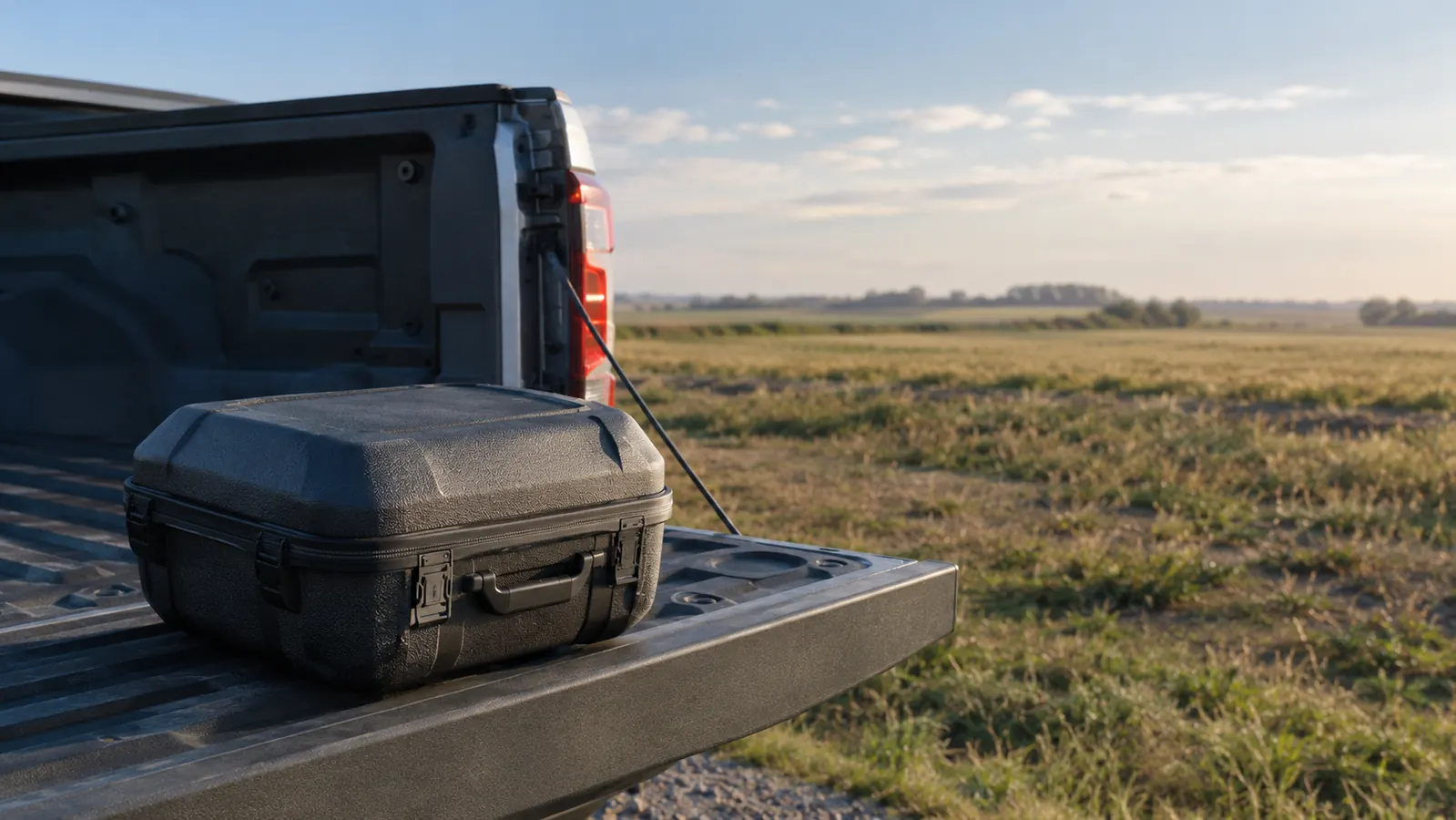
Since then the case has been on maybe a hundred trips. Open farm fields east of Spokane, the Palouse hills, lakes in north Idaho, plus a few winter mornings cold enough that the truck read 14 degrees. The case rides on the floorboard or in the bed, has been rained on, and has been dropped from tailgate height twice. The drone inside has never been hurt, and the gimbal has never needed a repair. That is the whole job, and it does the job. I do not treat the case gently, and it does not ask me to.
I fly with the standard RC-N2 controller and, for the last year, an iPad mini on a Hanatora tablet holder. That matters for this review, because the case was clearly cut for a phone, not a tablet. It holds the drone, the controller, and the accessories. It does not hold the iPad. More on that below, but the short version is that I carry a second small bag for the tablet on most flights. If you fly the same way I do, that is the first thing you should know before you order.
What Fits and What Does Not
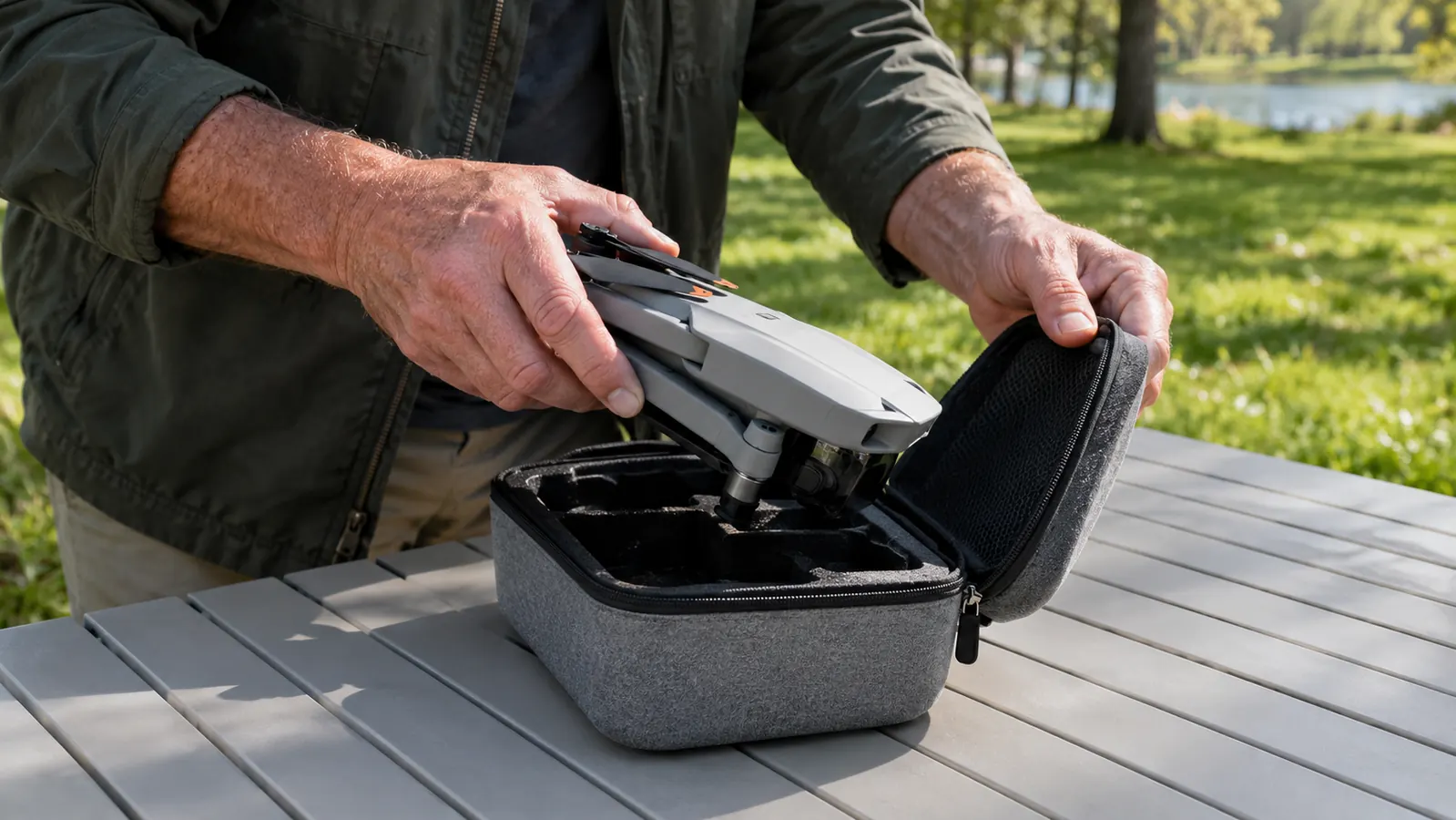
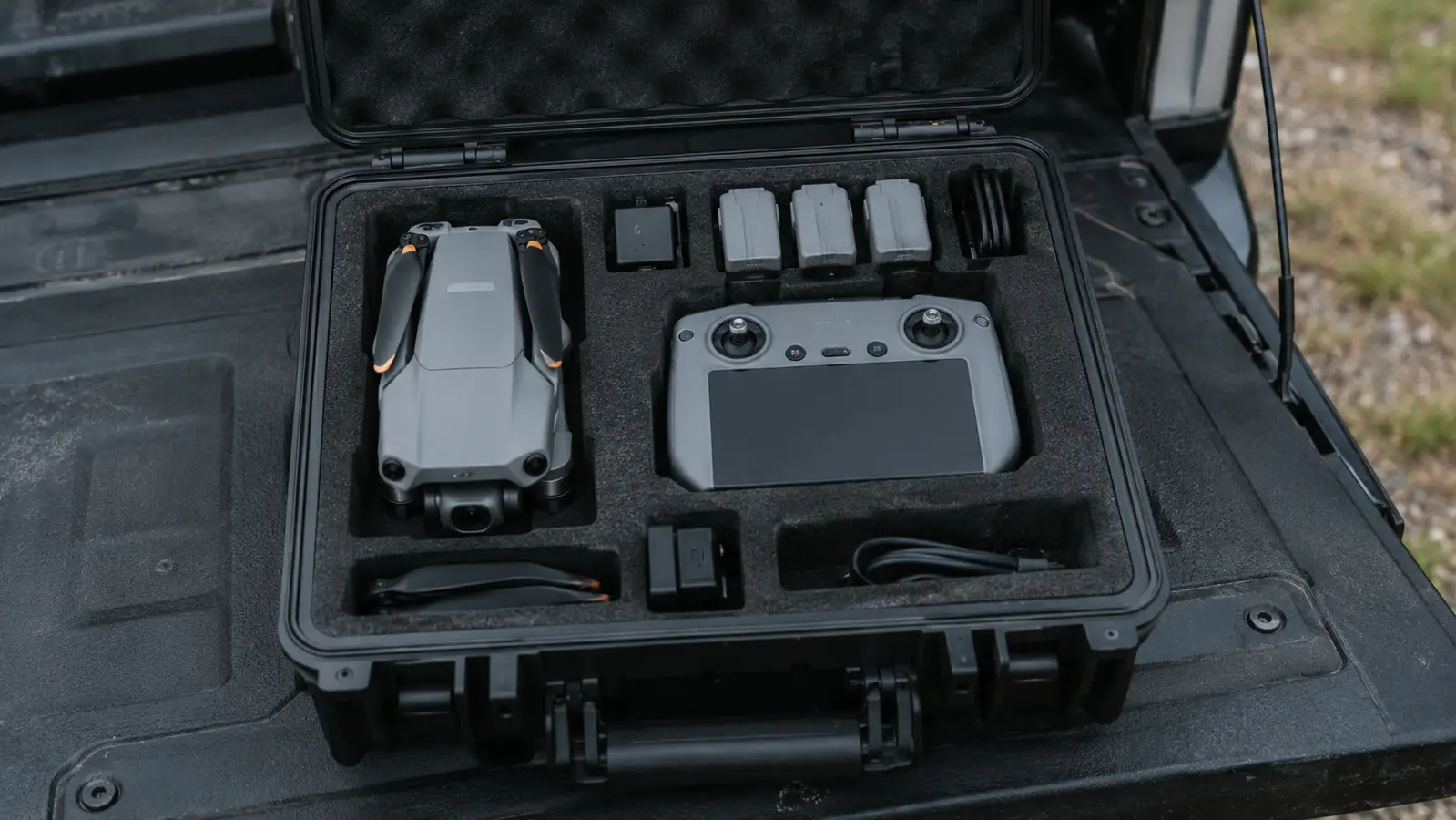
The main cutout holds the Mini 4 Pro with the gimbal protector on, and the foam is firm enough that the drone does not shift when the case gets jostled in the truck. There is a cutout for the RC-N2, a slot for a phone, and room for the Fly More batteries if you stack them. The mesh pocket on the lid takes the VIFLY strobe, the NEEWER filters, and a set of spare props. Everything has a place, which is more than I could say for the soft bag it replaced. The organization is the reason I reach for this case instead of a padded sleeve.
Now the part that does not show up in the photos. The controller cutout is cut for the controller alone. The RC-N2 with a phone in the clip does not sit flat, and my iPad mini has never fit anywhere in the case. I carry the iPad in my jacket and keep the phone out of the clip when I pack. It is a small thing, but it is the difference between carrying one bag and carrying two. Most reviews mention the drone cutout and stop there. The controller fit is the detail you actually live with.
The listing also says the case fits the Mini 3 and Mini 3 Pro, and the foam is the kind you can pull out and rearrange. I have not tested those drones myself, but the cutout layout makes it believable. If you think you might switch drones before the case wears out, that is worth something. The same case covers three drones, which is rare in this category and rare in this class.
One more fit note. The phone slot in the lid is sized for a phone without a thick case. My phone with a basic cover slides in fine, but a rugged cover will fight you. I stopped using the slot and keep the phone in my pocket, which is where it belongs anyway on a flight line. The slot is not wasted space, though. I use it for the spare props, and they stay put.
The Zipper Question
The title of this review mentions the zipper, so here is the straight version. The case closes with one zipper that runs around three sides, and the pull is small. When the case was new, the zipper was stiff enough that I had to brace it against my leg to get it started. Two years in it moves smoothly, but it is still a two-hand job. One hand holds the case, the other works the pull. If you want to grab the case and open it one-handed while the drone hovers, you will be annoyed. If you set the case down before you open it, you will not care.
On the other hand, the zipper has never failed me. No skipped teeth, no fabric caught in the track, no blown seam. For a case that lives in a truck bed and gets closed in a hurry, that reliability matters more than the pull size. I would trade the one-handed opening for it again, and I have, every weekend for two years. A zipper that jams is a case that might as well be a brick.
The other thing about the zipper is that it is the only closure. There is no latch, no buckle, no secondary strap. If the zipper goes, the case is done. That sounds like a warning, but after two years of hard use mine shows no sign of going. I check it the way I check the propellers, quickly and before every flight, and it has never given me a reason to worry. That is the honest answer to the zipper question: it is the weak point in theory and the strong point in practice.
One trick I learned: run the zipper the long way around when you close the case, not the short way. It seats the foam lid evenly and keeps the drone from pressing against the top. It takes five extra seconds and it makes the case feel twice as solid. That is the kind of thing nobody puts in the manual, because there is no manual.
Two years, a hundred trips, one drop from the tailgate, and the gimbal has never needed a repair. That is the only job a case has, and the JSVER does it.
How It Holds Up Over Time
After two years, the foam still holds its shape. The drone sits in the same cutout with the same snug fit as the day I unpacked it. The shell has scuffs from the truck bed and a scrape from the tailgate drop, but no cracks and no flex in the hinge area. The mesh pocket stitching is still tight, and the handle has not pulled loose. For a case that costs what this one costs, that is the part that surprised me most. I expected the foam to soften by now. It has not.
The only wear I have noticed is cosmetic. The shell shows every scratch, and if that bothers you, this case will bother you. It is a working case, not a display piece. I stopped noticing the scuffs around the same time I stopped worrying about the drone inside, which was about the third trip. Scuffs on the case mean the drone is not taking the hits.
The foam has also kept its firmness in the cold. I fly on winter mornings when the truck reads 14 degrees, and cheap foam gets hard and brittle below freezing. This foam does not. The drone drops in the same way in January as it does in July. That consistency is the kind of detail you only learn after a year of use, and it is the reason I stopped looking at other cases.
The zipper track has worn in rather than worn out. The fabric around the opening has not frayed, and the pull has not bent. I have read reviews where people complain about the zipper after a few months. Mine took about fifty openings to break in, and it has been smooth since. If yours is stiff on day one, give it time before you give up on it.
Where It Falls Short
Here is what I would tell a friend. The JSVER case protects the drone, and it protects it well. It is also the bulkiest option I have owned. The soft bag it replaced folded flat. This case does not. It takes up a square foot of truck floor, and if you carry a backpack for hiking flights, the case does not fit inside it. You carry it separately or you leave it in the truck. I leave it in the truck more than I would like.
Second, the foam is cut for the drone and the controller, not for the extras. The mesh pocket holds the strobe and the filters, but there is no dedicated slot for a charger or a tablet, and the spare props rattle in the lid. None of that is a dealbreaker. It is just the difference between the listing and reality, and it is the difference most reviews skip. The listing makes the interior look roomier than it is.
Third, the case is not waterproof. It is water resistant in the way any zippered case is, which is to say a light rain is fine and a dunk in a lake is not. I keep that in mind when I set it down near the water at the north Idaho lakes. I have never had water inside, but I have also never tested the limit, and I do not plan to. If you fly near water, this matters.
Fourth, the handle is comfortable for carrying the case from the truck to a table, but not for a long walk. There is no shoulder strap and no way to add one. If your launch spot is a ten minute hike from the parking lot, you will be switching hands the whole way. That is the trade for the protection, and it is a fair one, but it is still a trade.
Alternatives I Considered
The honest answer is that I keep coming back to the same two options. The soft bag I used before was easier to carry and took less space. It also got crushed under a toolbox. I know which failure mode I am willing to risk now, and it is not the soft bag. Protection won, and it has won every time I have thought about switching back. The soft bag is lighter until the day it is not.
The other option is a backpack, and if you are torn between a hard case and a backpack, that is a real decision. The short version: the case protects better and the backpack carries better. I keep the case in the truck and carry the drone to the field in my hands. If you hike to your launch spots, the backpack probably wins. If you drive, the case does. I drive, so I case.
I also looked at hard cases from other brands, including ones that cost more and ones that cost less. The more expensive ones were nicer, no question, but not nicer enough for me to replace a case that had already proven itself. The cheaper ones felt thin in the foam and the zipper. The JSVER sits in the middle, and the middle is where I landed. Sometimes the middle is the right answer.
The comparison I keep coming back to is the one I cannot show you: the soft bag under the toolbox. Every time I think about the bulk of the hard case, I remember that afternoon and I stop thinking about it. A case that protects is worth the space it takes. A case that does not protect is worth nothing, no matter how flat it folds.
What I Liked
- Firm foam cutouts keep the Mini 4 Pro and RC-N2 from shifting in the truck
- Zipper has never failed in two years of hard use
- Mesh lid pocket organizes the strobe, filters, and spare props
- Fits Mini 3 and Mini 3 Pro as well, per the listing
- Foam stays firm in cold weather
- Handle and stitching have held up with no loose threads
Where It Falls Short
- Bulkier than the soft bag it replaced, and it does not fold flat
- Controller cutout is snug with a phone in the clip
- No place for a tablet, so I carry the iPad separately
- Zipper needs two hands until it breaks in
- Shell shows scuffs and scratches quickly
Who This Is For
If you fly a Mini 4 Pro or a Mini 3 from a car, want the drone and the RC-N2 in one case, and treat your gear the way I treat mine, this case is for you. It protects, it organizes, and it has not failed me in two years. That is a short list of requirements, and the JSVER meets all of them. I would buy it again tomorrow, and I do not say that about most gear. It is the rare piece of kit that does exactly what it says.
Who Should Skip It
If you hike to your launch spots, pack light, or fly with a tablet on the controller, skip it. You will be carrying a second bag anyway, and the bulk will annoy you every time. Get a backpack or a padded sleeve and keep the drone on your back instead of in your hand. There is no shame in that. It is just a different way to fly, and the JSVER case is built for the way I fly, not the way everyone flies.
My short answer, two years in
The JSVER case is the right call if you drive to the field and want the Mini 4 Pro protected on the way. Check today's price on Amazon and see if it fits how you fly.
Amazon Check Today's Price on Amazon →