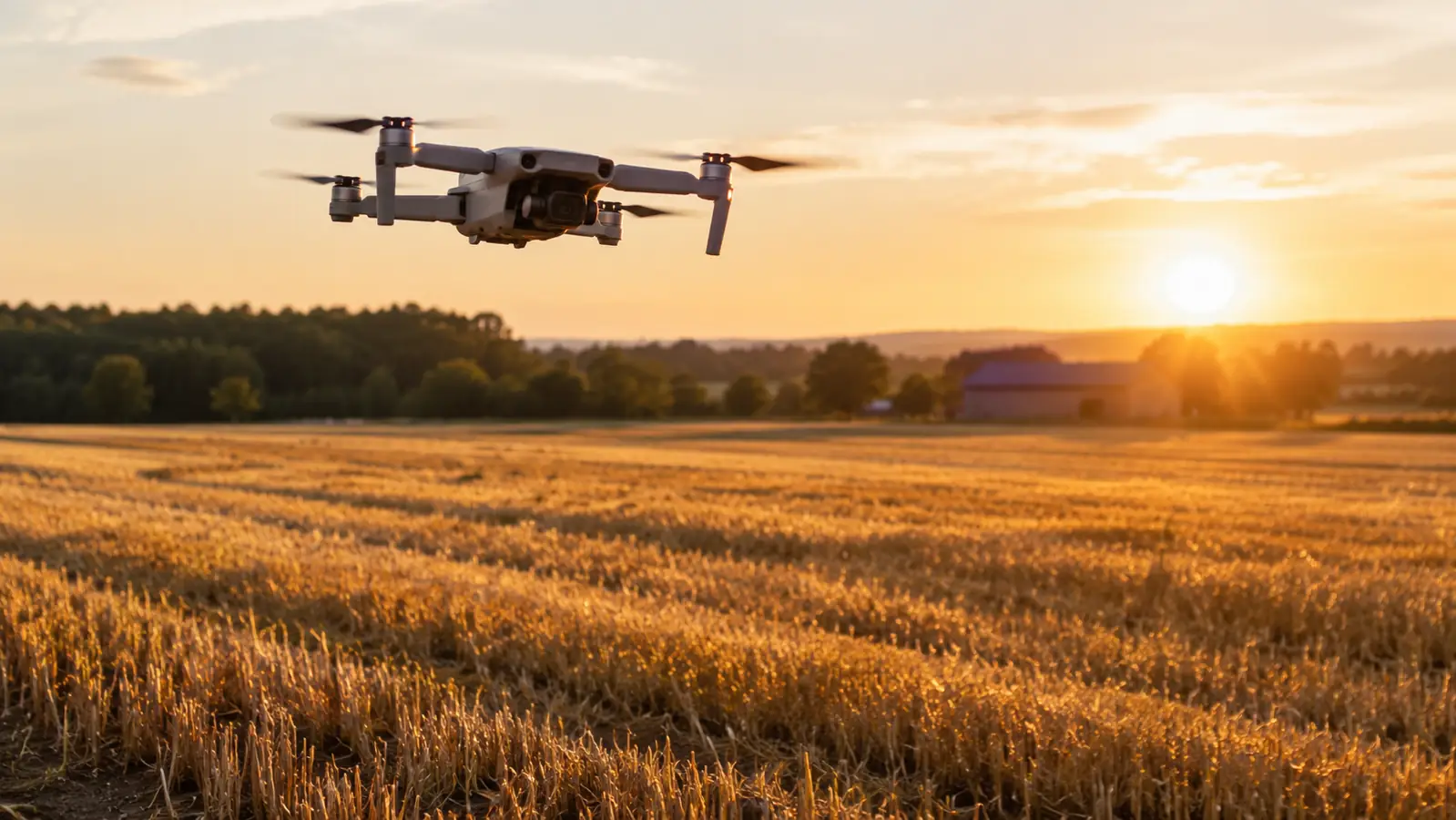
I bought the NEEWER ND and CPL filter set for my DJI Mini 4 Pro about a year ago, and I bought it for one reason: my daylight footage looked like a security camera. In full sun, the camera picks a fast shutter to avoid blowing out the highlights, and a fast shutter freezes every frame. Water turns to glass, waving grass looks like plastic, and the propellers flicker in a way that makes the whole clip feel like video instead of film. A neutral density filter blocks light so the camera has to slow the shutter down, and the old rule is to land at roughly double your frame rate. At 30 frames per second, that means 1/60 of a second. It is the single biggest difference you can make to drone video without learning to edit, and it is the reason I have kept these filters in the bag for a full year.
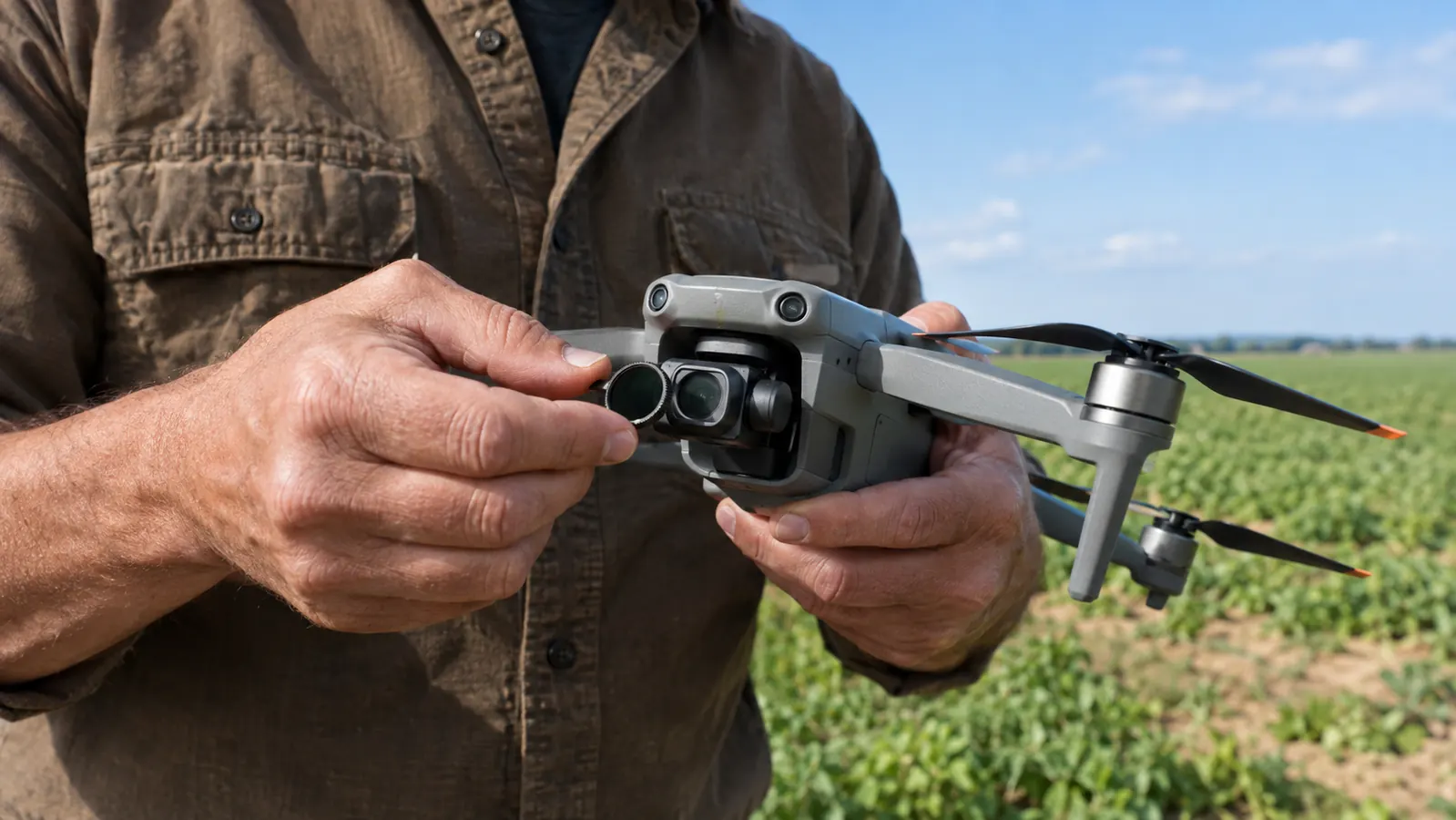
The set is four filters: three neutral density filters in the middle range and a circular polarizer. They thread onto the Mini 4 Pro's small camera lens, and they live in a flat case that fits anywhere in my JSVER hard case. I have flown them through a Washington summer, a fall over the Palouse hills, and a winter of cold starts in the farm field east of town, which is the part most filter reviews skip. Anyone can tell you how a filter looks on day one. The question is how it behaves after a year of dust, wind, and the occasional hard landing. This is that review.
The Quick Verdict
These filters do the one job that changes daylight drone footage the most, and after a year of hard use mine still seat clean and the glass is still clear. They are not the last word in filter glass, but they are honest value for a hobby pilot.
Amazon Check Today's Price →Daylight footage looks sharp and lifeless. These filters are the fix.
Three ND filters and a CPL that thread on in seconds, cut glare over water, and force the shutter speed down to where motion looks natural. No editing skill required.
Amazon Check Today's Price on Amazon →How I've Used It
My routine is simple. I fly most weekends, usually out of the back of my work truck at a farm field east of Spokane or at a public park in town. In summer that means bright sun from mid-morning until early evening, which is exactly the window where an ND filter earns its keep. I keep the lightest ND on for overcast days, the middle one for normal sun, and the darkest for the brightest afternoons. The CPL goes on whenever I am over water. The wind out here is the other constant, so I also check that the filter is seated before I fight a gust. It took me about two weeks to stop thinking about which filter was on the lens and start thinking about the shot, which is the real test of any gear.
The mistake I made in the first month: I left the darkest ND on at dusk. The footage came out dark and muddy, and I spent an evening of editing trying to save it. Now I check the lens before every takeoff, the same way I check the props. It is the same habit I built after I flew my old Mavic Air 2 into a pine tree, and it has saved me twice since. The other habit is checking the filter for dust before I launch, because a speck on the glass shows up as a soft smudge in the middle of the sky. A filter is only a problem when you forget it is there.
The gimbal is the thing people worry about with filters on a Mini. The camera is small and the gimbal does a lot of work. I have seen the overload warning exactly three times in a year, and twice it was because I had not seated the filter all the way. When the filter threads on straight, the gimbal handles it fine. When it is crooked, the drone tells you fast. That is the main reason I would not trust a badly made filter on this camera, and it is the reason fit matters more than glass.
What the Filters Actually Do
The short version is shutter speed. Video looks natural when the shutter is at roughly double the frame rate. At 30 frames per second, that means 1/60 of a second. In daylight, the Mini 4 Pro's camera wants to shoot at 1/1000 or faster because it is trying to avoid overexposure. Every frame is tack sharp, and motion looks wrong. It is the same reason a 4K security camera can still look like a security camera. Resolution is not what makes footage look like film. Motion is.
An ND filter is sunglasses for the lens. It blocks light so the camera has to slow the shutter down, and suddenly the water in a river moves like water instead of a sheet of glass. The CPL is a different tool. It cuts glare and reflections, which matters most over lakes and wet pavement. On a bright day over a north Idaho lake, the CPL is the difference between seeing through the surface and seeing a white sheet. I use the ND filters more, but the CPL is the one that surprises people when they watch the footage.
None of this is complicated, but it is the kind of thing you do not notice until you see it side by side. I shot the same farm field once with and without the filter, same height, same direction, same time of day. The unfiltered clip looked like a screenshot that moved. The filtered clip looked like the field. I still have that comparison clip on my phone and I still show it to people. That one comparison taught me more than any video tutorial, and it is the test I would tell anyone to run before they spend money on anything else for their drone.
A Year of Use: What Held Up
The filters have been through a lot. They have ridden in my JSVER hard case through a summer of truck rides, they have been covered in dust from the farm fields, and they have survived one hard landing that I caused by misjudging a gust. The landing popped the drone onto gravel and the filter off the lens. I found it in the grass, expecting a scratch. There was not one. The ring took the impact, the glass stayed clear, and the filter threaded back on like nothing happened. The cold start test is real too. On a 20 degree morning the filters thread on the same as they do in July, which is not true of everything in my bag.
The threads still seat clean, which is the thing I would not have predicted. Cheap filters often start to bind after a few months of dust. These have not. The glass still looks clear, and I clean it the way I clean any lens: a soft brush first, then a microfibre cloth, never a shirt sleeve. The markings on the rings are small but readable, which matters more than it sounds when you are switching filters between flights in a hurry.
The case that NEEWER packs with the set is the quiet hero. It is flat, it holds all four filters snug, and it slides into a pocket of my JSVER case without adding bulk. I have dropped it twice. Nothing rattles. For the price of this set, the case alone feels like it should have cost half of it.
The CPL Over Water
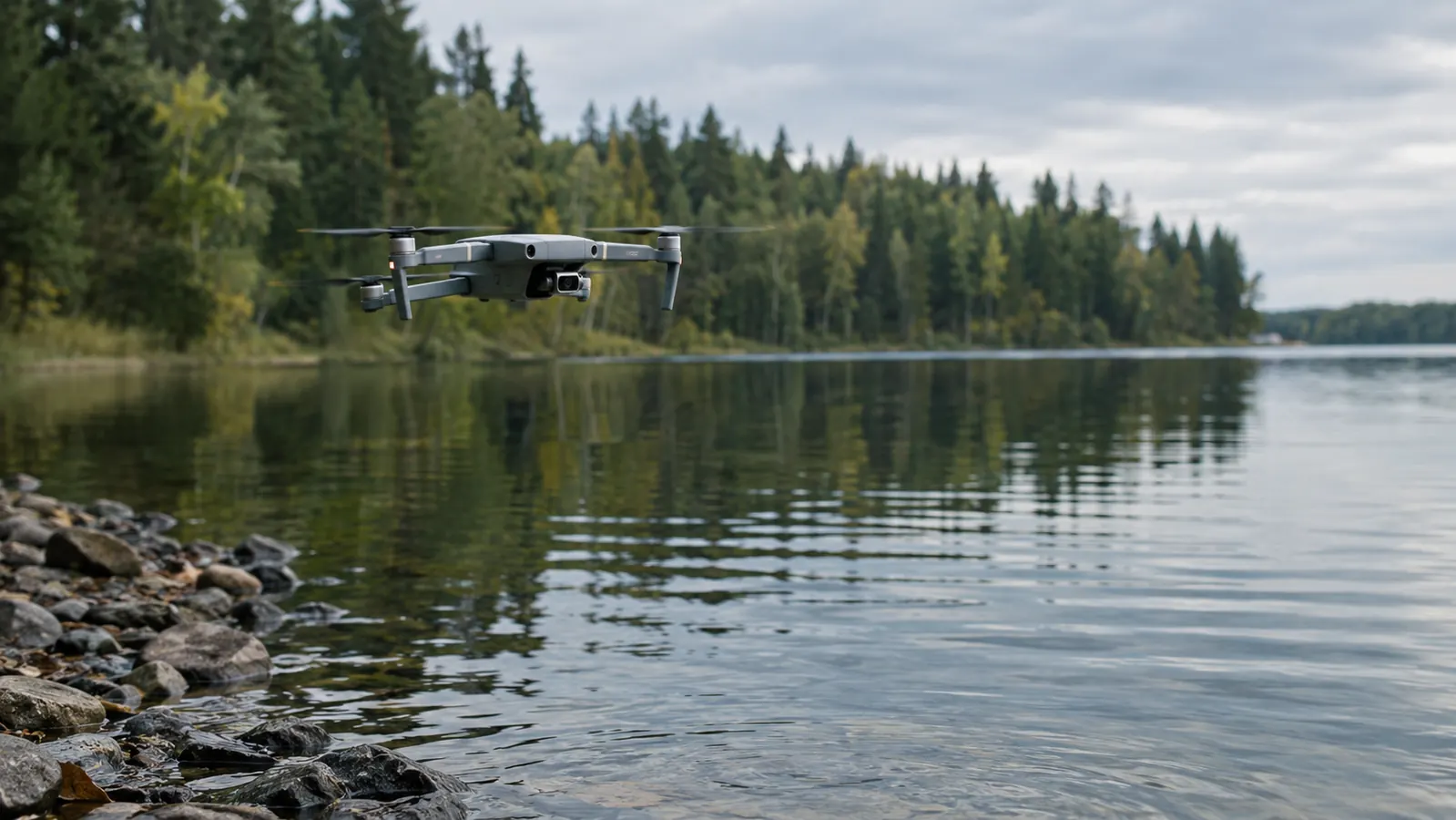
I fly over lakes in north Idaho a few times a year, and the CPL is the reason I keep this set in the bag even on days when the ND filters stay home. Glare on water is the fastest way to ruin an otherwise good shot. It flattens the surface, blows out the highlights, and makes a beautiful lake look like a parking lot. The CPL cuts most of that if you take a second to turn it before takeoff.
The catch is that you have to set it on the ground, because you cannot reach the filter ring in the air. I turn the CPL until the glare drops in the phone screen, then I lock the filter in place and fly. It is not perfect for every angle, because the effect changes as the drone turns, but it is right for the shot more often than not. On the lake shots that matter, it has saved footage I would have thrown away.
Where It Falls Short
The honest cons start with range. There is no strong ND in the set, so the brightest snow scenes still push the shutter faster than I would like. For most of my flying, that is fine. For a winter day over fresh snow, I want one more stop. The CPL also takes getting used to, because you cannot see its effect on a phone screen the way you can through a viewfinder. You learn to trust it, and you learn which angles it helps.
The other thing is the size. These filters are small, and small things get dropped. I have dropped one in the grass twice and found both, but it is the kind of mistake that ends with a filter under a tire if you are not careful. And the set is not the only option. DJI's own filters cost more, and the cheapest no-name sets worry me because a filter that threads on crooked can damage a gimbal. The NEEWER set sits in a reasonable middle, which is exactly where a hobby pilot should be.
Alternatives I Considered
I thought about the DJI-branded filter set when I bought this one. The local shop carries it, and I have held it in my hands. It is nicely made, and the glass gets good reviews. It also costs more. I went with the NEEWER because the price made sense for a hobby pilot and because the reviews from other Mini 4 Pro owners were consistent about the fit. After a year, I do not regret it. I have not compared them side by side, so I will not pretend one is clearly better. What I can say is that this set has not given me a reason to upgrade.
I also considered a variable ND, one filter that does everything. I decided against it because variable NDs can shift colour as you turn them, and on a drone you cannot see the effect live the way you can on a ground camera. A fixed set is harder to get wrong, and getting it wrong is what costs you footage. For the way I fly, the four fixed filters are the right tool.
What I Liked
- Threads on smooth and seats straight, which protects the gimbal
- Three ND strengths cover most daylight conditions
- CPL cuts glare over water and wet pavement
- Glass stayed clear through a year of dust and one hard landing
- Flat case fits anywhere in a hard case or bag
- Reasonable price for a hobby pilot
Where It Falls Short
- No strong ND for snow or the brightest scenes
- CPL effect is hard to judge on a phone screen
- Small filters are easy to drop in grass
- Markings are small and easy to misread in a hurry
The difference between a 1/1000 shutter and a 1/60 shutter is the difference between footage that looks like a security camera and footage that looks like film. After a year, these filters are still the cheapest way I have found to make that change.
Who This Is For
If you shoot video with a Mini 4 Pro in daylight, and you want water, grass, and traffic to move the way they move in real life, this set is for you. If you fly over lakes and want to cut glare, the CPL alone is worth the price. If you are willing to learn one setting, shutter speed, these filters give you the control to use it. That is the whole job, and they do it without fuss.
Who Should Skip It
If you only shoot photos, skip this set. Stills do not have the same motion blur problem, and the Mini 4 Pro handles them fine without filters. If you only fly at dawn and dusk, the light is already low and an ND filter will just make your footage darker, which is the wrong direction. And if you never leave auto mode, do not buy filters yet. Learn the shutter setting first, then buy the filters. The filters do not fix exposure. They give you the room to set it. If you plan to sell footage or make money with the drone, you will probably want a stronger set with more range. This set is for the rest of us.
A year in, this is still the upgrade I would buy again.
Three ND filters and a CPL that fit the Mini 4 Pro, survive real use, and fix the one thing that makes daylight drone footage look amateur. If you shoot video in the sun, this is the cheapest change you can make.
Amazon Check Today's Price on Amazon →