Six years of flying camera drones, and the one piece of gear I almost skipped is the one I use on every single flight. I mean the landing pad. I bought the YINGJEE 22 inch foldable pad about two years ago, the same week I picked up my Mini 4 Pro, mostly because I was tired of wiping dust off the gimbal after every landing in a farm field. It turned out to be the cheapest insurance I own. Here are the ten reasons it never leaves my bag.
I fly out of open farm fields and a public park east of town, and there is not a flat, clean patch of ground in either place. Before I started using a pad, every flight started with a decision about where to set the drone down without wrecking it. Now I unzip the bag, lay out the pad, and get on with flying. It takes about ten seconds, and it saves me from the thing I hate most, packing a dirty drone back into the case.
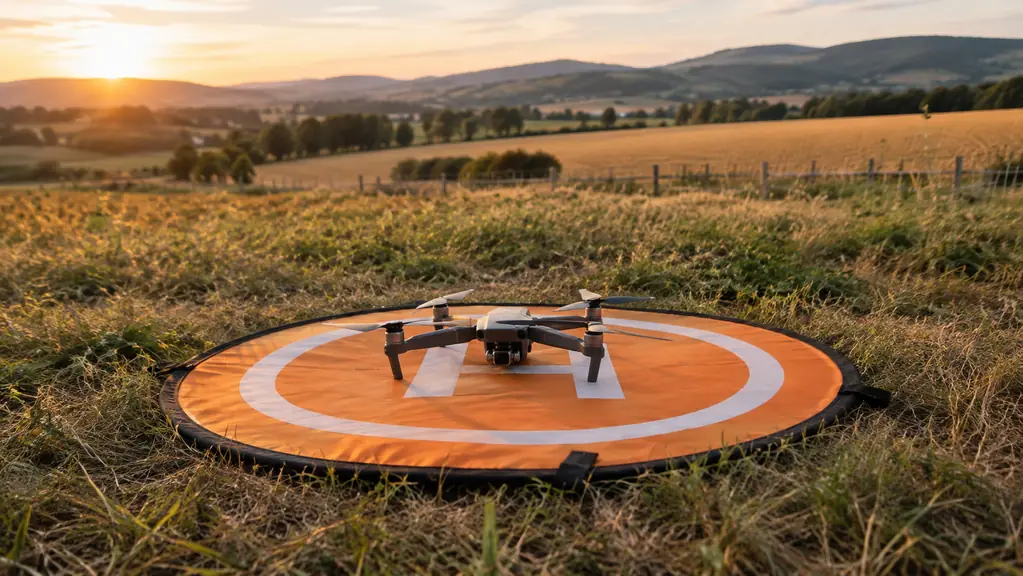
The pad I have trusted for two years of weekend flights
The YINGJEE 22 inch pad folds down small enough to ride in the JSVER case, and it has held up through two seasons of farm fields, gravel lots and dry grass.
Amazon Check Today's Price on Amazon →It stops rotor wash from turning the ground into a dust cloud
Take off from bare dirt and the props do the digging for you. The wash kicks up a cloud of fine dust, and that dust goes straight into the gimbal motors and the cooling vents. In the Palouse in August, the dirt is powder. I learned this the hard way on a dry afternoon, and I spent the next hour cleaning the drone before I trusted it to fly again. The YINGJEE gives the props a clean surface to push against, so the dust stays on the ground where it belongs.
Grass throws more at your props than you expect
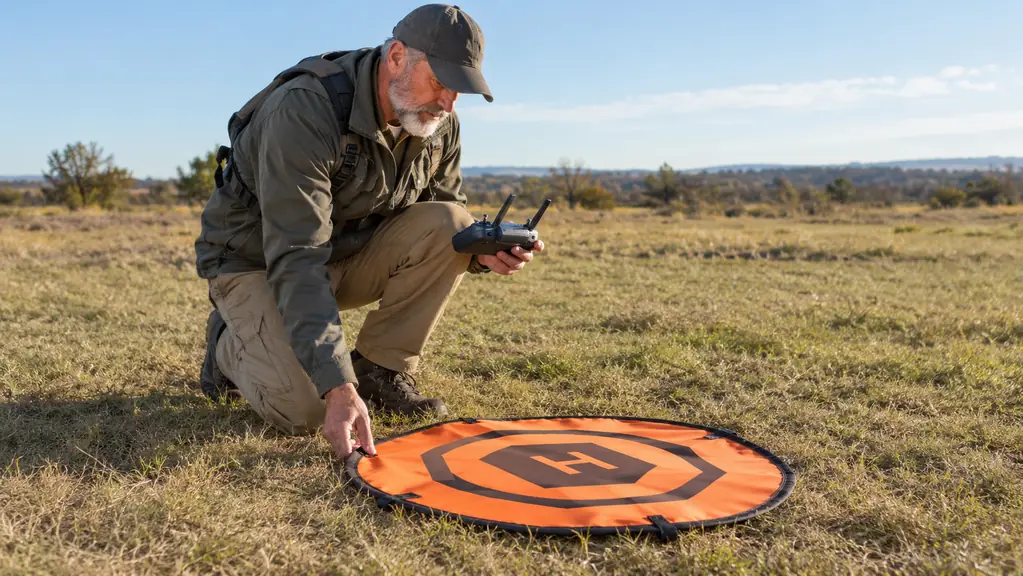
Short grass looks harmless, but the wash flattens it and sends seeds, clippings and the occasional pebble up into the props. I cracked a prop on my old Mavic Air 2 that way, a small nick that got worse by the end of the day. A pad gives you a clear zone around the drone. No seeds, no clippings, no surprise pebbles, and no mid-flight prop failure.
It gives the gimbal a clean, dry place to rest
The gimbal on the Mini 4 Pro is the most exposed part of the whole drone. Set it down on damp grass and you get moisture in the motors. Set it down on sand and you get grit in the bearings. The pad is waterproof, so the drone sits on a clean, dry surface from the moment it lands until you pick it up. That alone is worth the space in the bag.
It evens out ground that is never actually level
Farm fields are not pool tables. I have landed on slopes where one arm sat clearly lower than the other, which is hard on the landing gear and makes the compass behave oddly on the next takeoff. The pad flattens out most of that unevenness and gives the drone a level platform for the compass and IMU checks before you spool up.
It makes hand catching optional on windy days
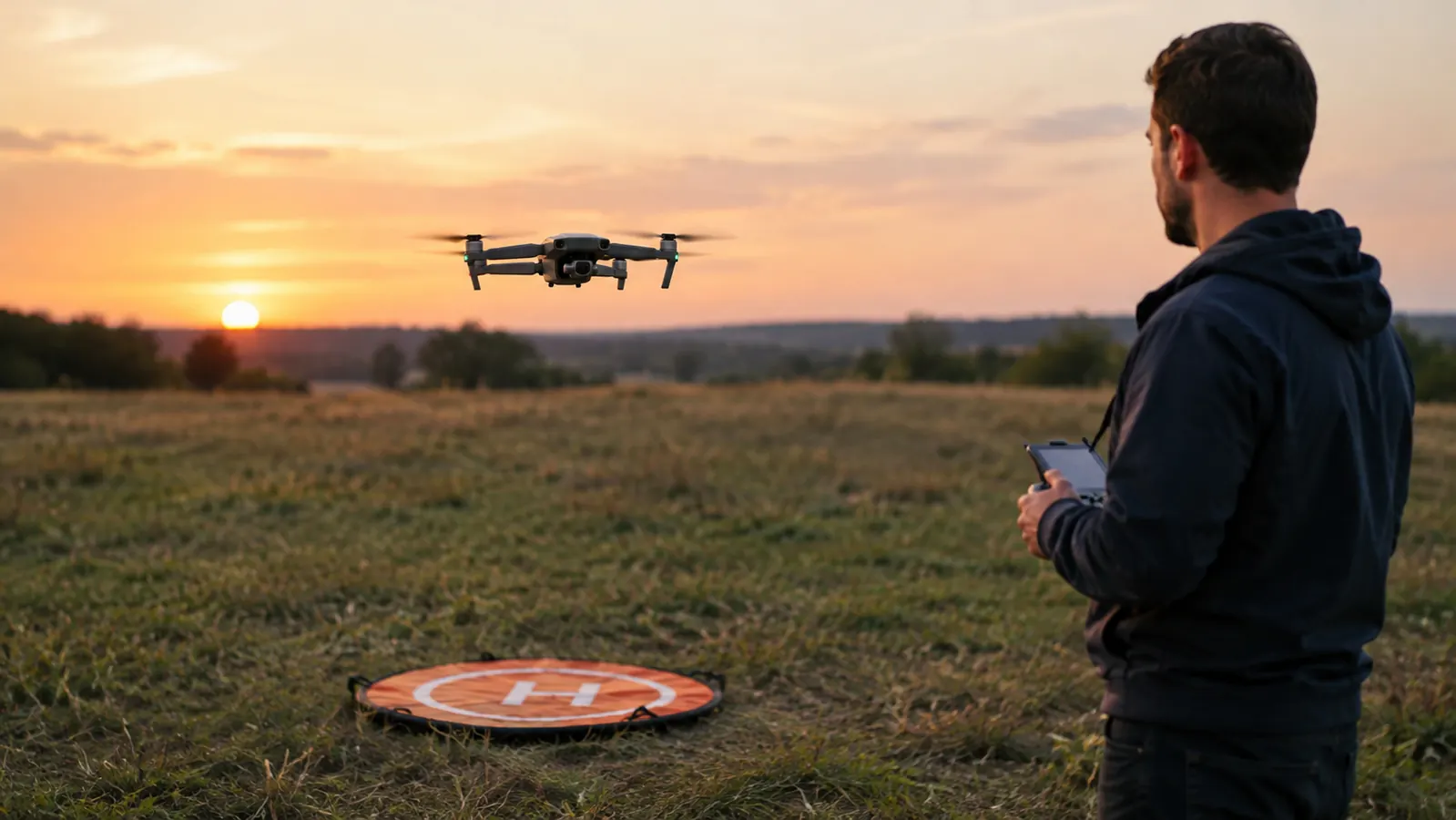
Spokane is windy, so I fly in wind a lot. When it gusts, the usual play is to hand catch the drone, which means reaching up near spinning props. I would rather not. I have hand caught drones plenty of times, and it works, until the day it does not. With the pad out, I can bring the Mini down onto a stable surface and let it settle, even when the gusts are pushing it around. The pad stays put on the ground.
It keeps sand and grit off the camera lens
Land on sand and the wash can throw grit straight at the lens. I have seen a friend's lens coating go hazy from repeated sand landings, and that is not a cheap repair. The pad clears a space around the drone so the camera stays clean. My NEEWER ND filters stay scratch free too, which matters when you swap them between shots.
Morning dew will soak a drone that lands on grass
The best light is in the morning, and morning grass is wet. Land on it and you pack the drone away damp. Moisture finds its way into battery contacts and the gimbal over time. The pad is waterproof, so even when the field is soaked, the drone stays dry. That matters when you are driving home with it in the JSVER case.
It gives you a fixed visual reference for landing
Bringing a drone down over dead grass on a bright day is genuinely hard because your eye has nothing to measure against. The first few times I landed without a pad, I set down short and the drone settled into the grass at an angle. The pad stands out against grass and dirt, so you get a fixed object for depth perception. It shows up in the camera feed too, which means you can line up the landing from the screen instead of guessing.
It keeps props from nicking on gravel
I park at a gravel lot near the park east of town. Land on that and the props can catch a stone on the way down, which nicks the leading edge. A nicked prop is a replaced prop. The pad gives the props a smooth surface to spin down against and keeps the drone from tipping if one arm settles on a rock.
It saves more time than it costs
This is the reason nobody thinks about. A clean landing means less time wiping the drone down, less time picking grass out of the gimbal, less time checking props for nicks. Ten seconds of laying out the YINGJEE saves me ten minutes of fiddling after every flight. I timed it once. Setup is ten seconds, and cleanup is another ten. The time I save not cleaning the drone is the real win, and it is the reason the pad never leaves my bag.
What I'd Skip
If you only ever launch from a clean, flat surface like a tabletop or a purpose-built launch site, you can skip the pad. And the 22 inch size is right for a Mini class drone, but if you fly something bigger than the Mini 4 Pro, you will want the larger version. The pad is also not a fix for a truly bad site. Deep mud and deep snow will beat it. But for the flying I do, out of farm fields and dry grass east of Spokane, it earns its spot every weekend.
The cheapest insurance I own is a flat piece of fabric I lay on the ground before every flight.
Two years in, the YINGJEE is still the first thing out of my bag
It folds flat, it stays put, and it keeps the dust and dew off the drone. If you fly from grass or dirt, this is the simple fix that saves you a gimbal.
Amazon Check Today's Price on Amazon →