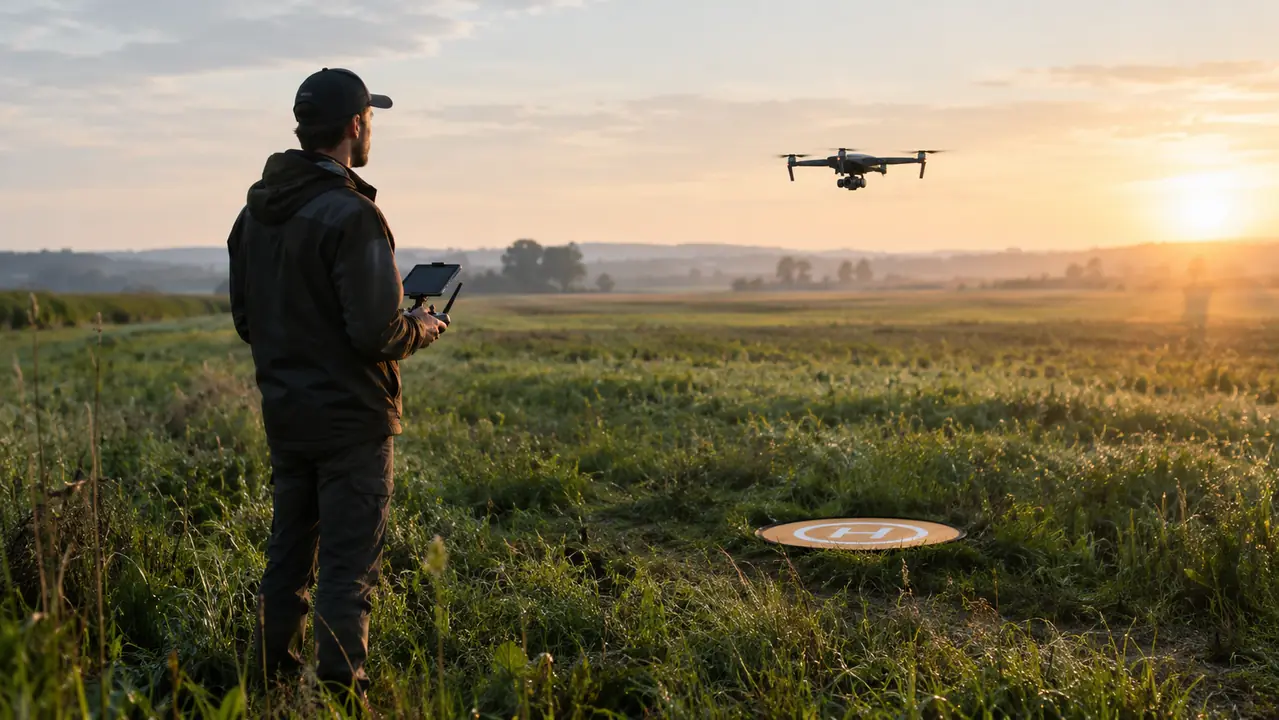
It was a Saturday in late spring, and the field east of Spokane looked perfect from the road. Flat, open, no fences to argue with, and a clear sky. What I could not see from the truck was the grass. It was nearly knee high in places, and it was soaked. The night before had dumped rain on the Palouse, and by nine in the morning the sun was up but the field was still holding every drop.
I knew better. I had the YINGJEE landing pad in the back of my truck, the 22 inch foldable one I bought the same week I got the Mini 4 Pro. It was right there in the side pocket of the JSVER hard case, next to the drone. But the spot I had picked looked dry enough from where I was standing, so I did the thing I always tell people not to do. I skipped the pad and set the drone down in the grass.
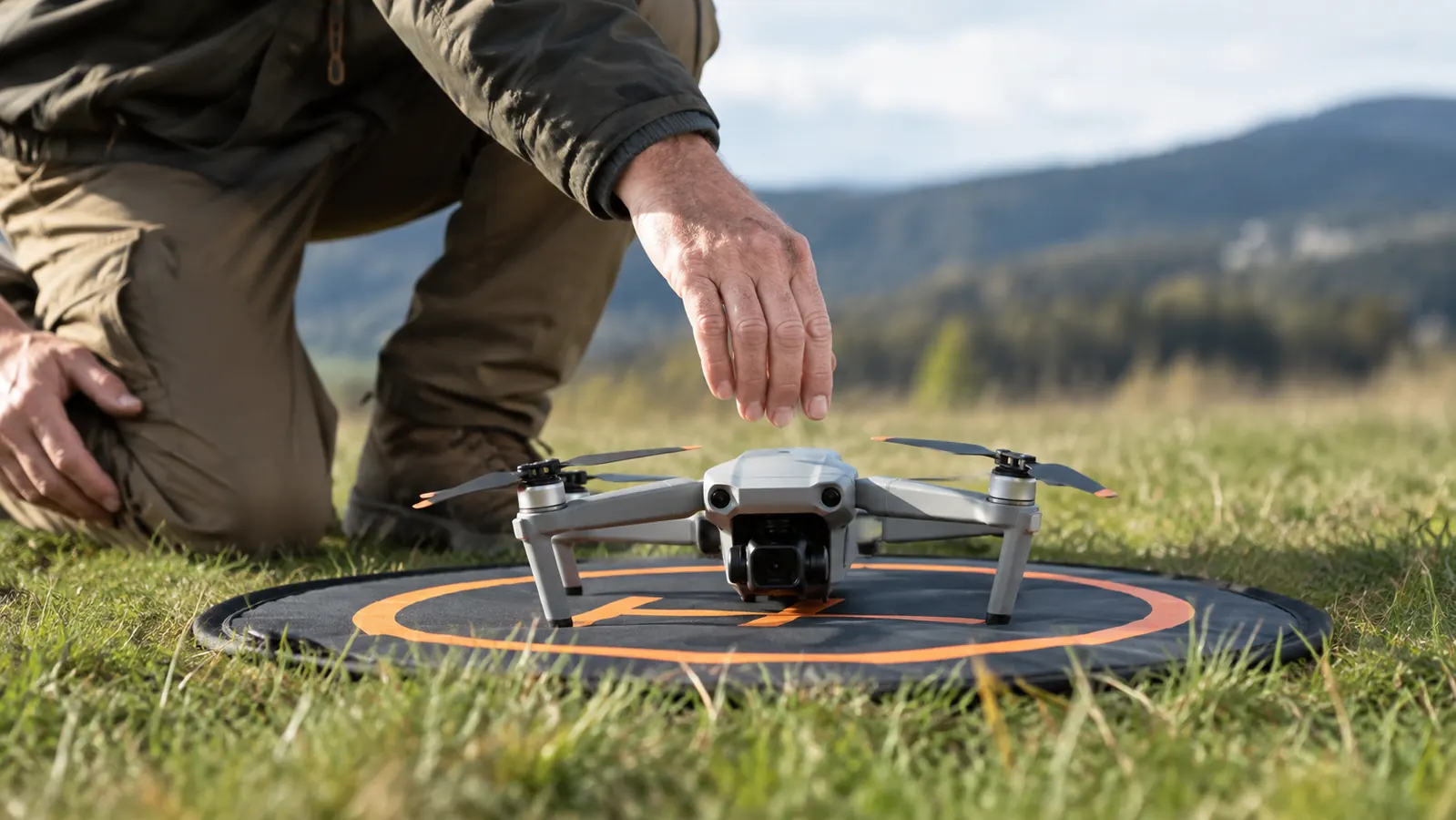
The first launch was fine. The props blew the wet grass flat and the Mini 4 Pro climbed out like nothing was wrong. I flew for maybe ten minutes, got the shots I wanted of the hills rolling into the treeline, and brought it back. That is when the trouble started. The drone settled into the grass, and the grass did not give. One leg caught on a stalk, the drone tipped, and the props dug into the wet stems before I could cut the throttle.
It was not a crash, not really. The drone stayed upright long enough for me to get it back in the air, and the only damage was grass stains and one bent prop that I replaced when I got home. But standing there in that wet field, watching the props chew through the grass and waiting for the motors to stall, I had about ten seconds of thinking I was about to watch a drone I had saved up for tumble through the weeds. The landing pad was twenty feet away in my truck.
That was the day I stopped treating the YINGJEE pad as optional. It took one near miss to teach me what the manual and about a hundred forum posts had been saying all along. A drone needs a clean, flat, dry place to touch down, and a patch of dew-soaked grass is none of those things. The pad is 22 inches across, folds down small enough to live in the side pocket of my JSVER case, and takes up less room than a water bottle. I bought it the same week I bought the drone. Then I left it in the truck like an idiot.
The landing pad was twenty feet away in my truck.
Learn this the cheap way, not the wet way.
The YINGJEE 22 inch landing pad folds flat, sets up in about ten seconds, and gives your drone a dry, level place to land even in a wet field. It is the most boring piece of insurance I carry, and I carry it on every flight.
Amazon Check Today's Price on Amazon →I used the pad on every flight after that, and here is what I learned. The pad does more than keep dew off the drone. It gives you a fixed point to work from. You put it down, you know exactly where the drone is going to land, and you are not hunting through tall grass for a spot that looks flat from eye level and is not. In the park east of town, where the sprinklers run all night, the pad is the difference between a dry takeoff and a drone that starts every flight with wet feet.
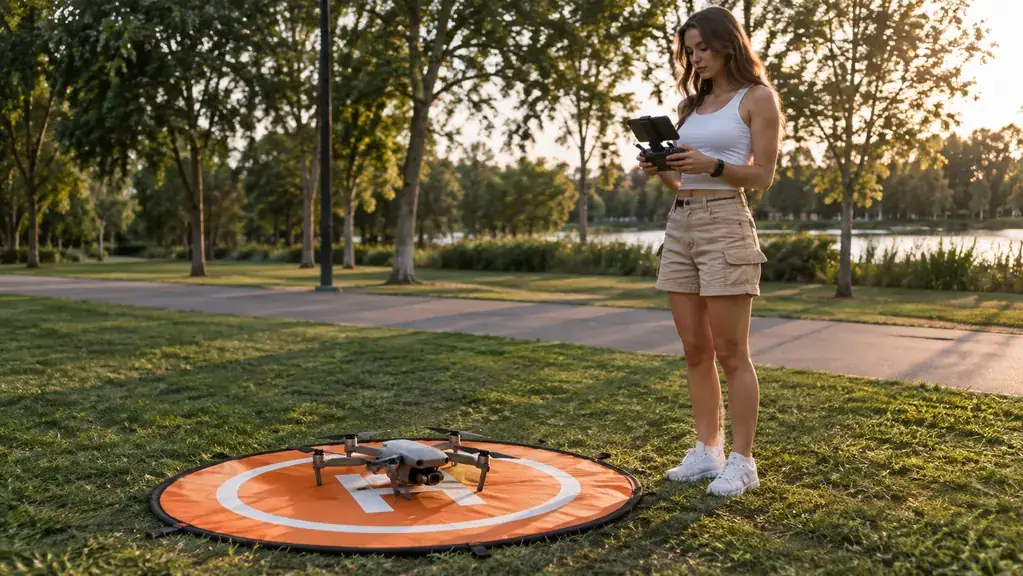
The other thing is the stakes. I fly a Mini 4 Pro over farm fields and lakes in north Idaho, places where a bad landing spot is not just an inconvenience. Wet grass can mean mud in the gimbal. A tall stalk can tip the drone before the props spin up. A gravel pullout means dust in the motors. The pad solves all of it at once, and it takes longer to read this paragraph than it does to unfold the thing and put it on the ground.
I will be honest about the downsides, because there is no point pretending. A 22 inch pad is on the small side, and if you are landing a bigger drone in a crosswind you will want something larger. The stakes that come with the pad are light and they bend if you treat them rough, so I replaced mine with tent pegs. On a windy day the pad can lift at the edges, so I set a water bottle on one corner. None of these are reasons to skip the pad. They are reasons to use it like a tool instead of a good luck charm.
Two years in, the YINGJEE pad has been through more flights than I can count, and it still looks like the day I bought it. It folds flat, it wipes clean, and it is the one piece of gear I never leave in the truck. The JSVER case holds the drone, the Hanatora tablet holder holds the iPad mini, and the pad rides in the side pocket where I can see it when I grab the case. That is the system now. If the pad stays home, the drone stays home.
What I'd Tell You If We Were Sitting at My Kitchen Table
I would tell you that the landing pad is the most boring piece of gear I own, and that is exactly why it is worth buying. Nobody posts footage of a clean takeoff. But every pilot I know has a story about a wet field or a dusty pullout or a drone that tipped in the grass, and most of those stories end with a repair bill. The pad is ten seconds of setup that removes a whole category of bad days. If you fly a Mini 4 Pro or anything in that size range, get the YINGJEE 22 inch pad, keep it in the case, and use it every time. I learned that lesson in a wet field on a Saturday morning, and I would rather you learn it from this article than from watching your drone tip over in the weeds.
The ten second fix that lives in my case.
The YINGJEE 22 inch landing pad folds flat, sets up in seconds, and gives your drone a clean, dry place to land in grass, dirt, or dew. It is the gear I should have used from day one.
Amazon Check Today's Price on Amazon →