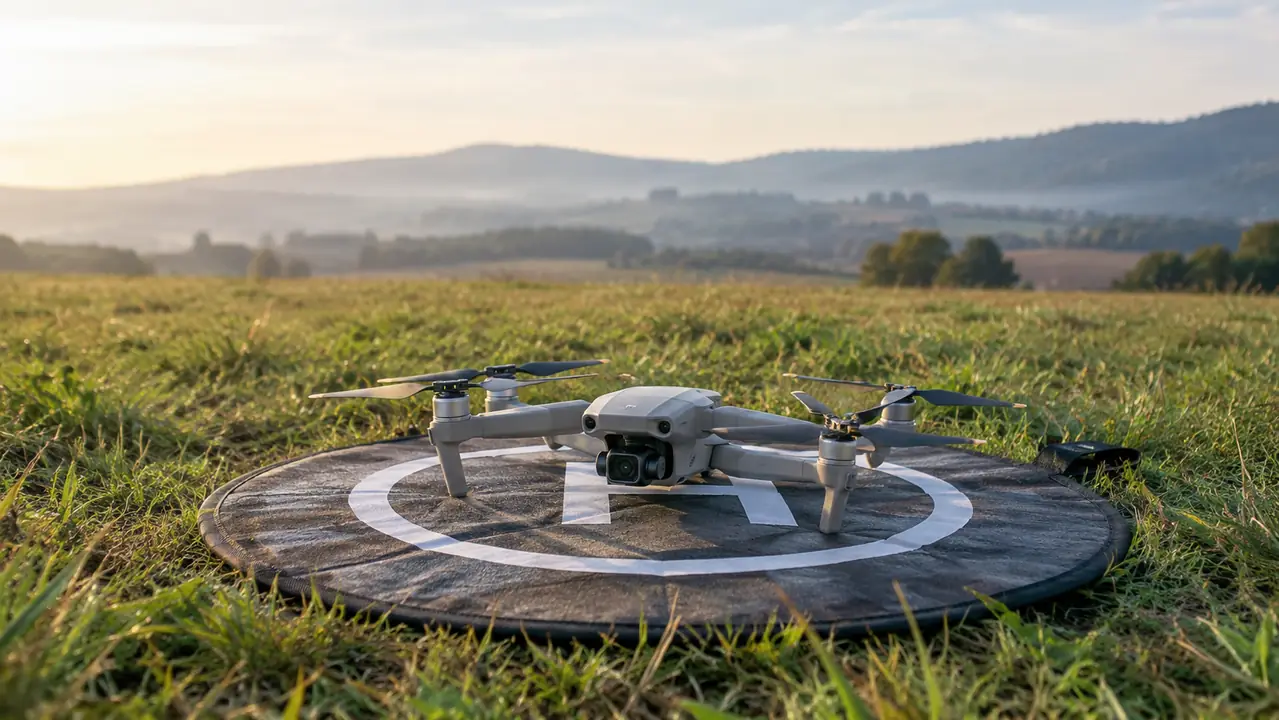
If you fly a small camera drone, you have launched from bare grass a hundred times without thinking about it. I did too, for years. Then one dry August afternoon in a farm field east of Spokane, I set my Mini 4 Pro down in a patch of dirt the size of a dinner plate. The props kicked up a little cloud of grit, and for the next two flights the downward sensors kept throwing a vision warning. Nothing broke. But I spent the rest of the day picking dust out of the gimbal with a lens brush, and that is when I started paying attention to what is actually under the drone when it takes off and lands.
So is a landing pad worth it? After two years with the YINGJEE 22 inch folding pad, my honest answer is: sometimes. Bare grass is fine on most days, and anyone who tells you otherwise is selling something. But the pad earns its keep on the dry, dusty, wet, and uneven days, and in eastern Washington those days show up more often than you would think. Here is the side by side.
| YINGJEE 22 Inch Pad | Bare Grass | |
|---|---|---|
| Price | One-time purchase, and only if you decide you need it | Free, every time, forever |
| Material | Waterproof fabric that wipes clean with a rag | Grass holds dew, mud, and pollen |
| Dust and grit | Props spin in clean air, away from dirt and clippings | Props blast whatever is under them into the gimbal |
| Wind | Lightweight pad can lift in a gust | Grass does not move |
| Setup and carry | Folds small, about ten seconds to deploy | Nothing to carry, nothing to set up |
| Landing surface | Same flat, clean surface at every spot | Every field is different: dirt, holes, twigs, long grass |
| Warranty | Backed by YINGJEE, easy to replace if it wears out | No warranty, but nothing to break |
Where the YINGJEE Pad Wins
The dust thing is the big one, and it is the reason the pad stays in my truck. The Mini 4 Pro carries its camera, gimbal, and downward sensors low, right where the prop wash hits. On a dry field, the props turn the grass into a blender. Dust, pollen, grass clippings, and the occasional pebble go straight up into the gimbal and sensor housings. I notice it most in late summer, when the fields east of Spokane go yellow and dry. After a few flights off bare grass, I could see a film on the lens, and the sensors would occasionally flash a vision warning. Off the pad, none of that happens, because the props spin in clean air for the two seconds that matter most.
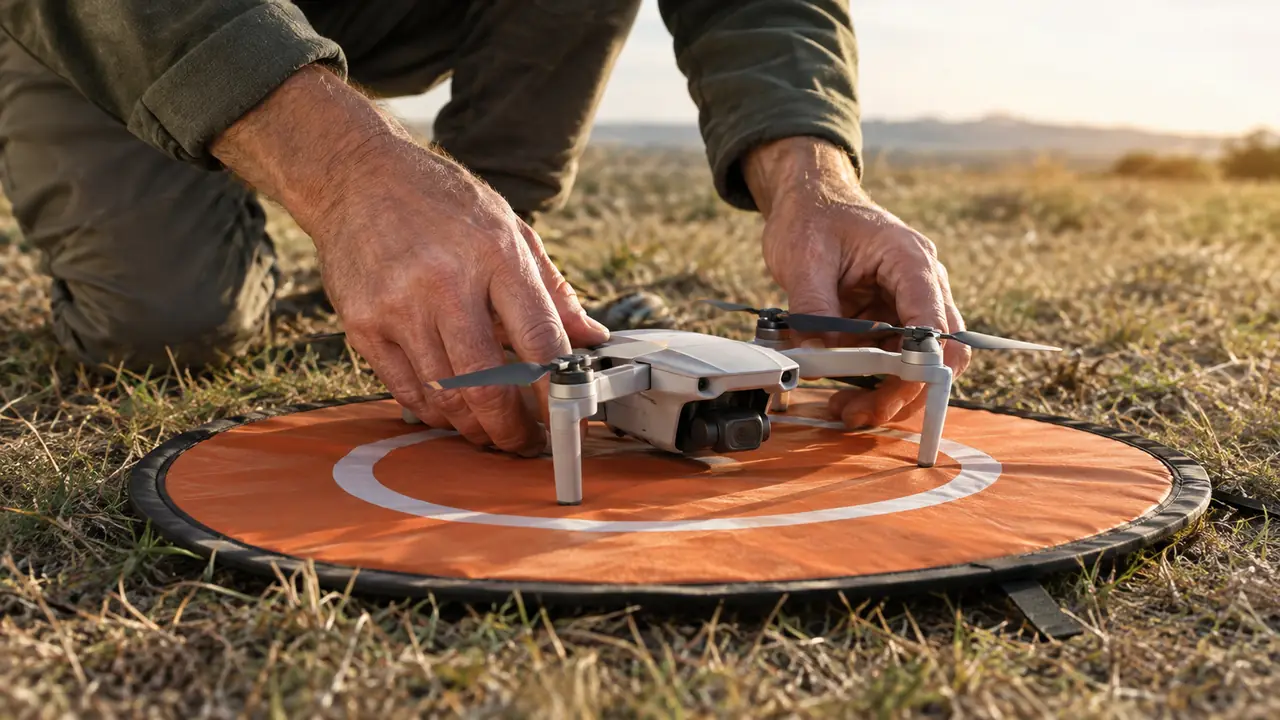
Wet ground is the other one. Dew sits heavy on the grass most mornings in the spring, and after a rain the fields turn to mud. Land on wet grass and the arms and sensors come back damp, and then you pack a wet drone into the JSVER case and hope it dries out before the next flight. The pad is waterproof, so I can fly off a field that is soaked and put the drone away dry. It also gives a flat, level surface, which matters more than people think. Grass hides dips and slopes, and a drone that settles on a tilt can tip over and take a prop strike on the way down.
Where Bare Grass Wins
The obvious one is that grass is free, everywhere, and already there. The pad is one more thing to remember, one more thing to carry, and one more thing to lose. On a mowed lawn or a maintained park, the pad adds nothing. I fly at a public park east of town sometimes, and on that short, even grass I have stopped using the pad entirely. It is simply not needed there, and I would not blame anyone for skipping it if that is the only surface they ever launch from.
Wind is the sneaky one. The YINGJEE pad is light, and a good gust can lift it right off the ground. I have chased mine across a field once, and I have seen other pilots weight theirs down with a battery on each corner. Grass never does that. Eastern Washington is windy most of the year, so on breezy days I either pin the pad down with whatever is handy or leave it in the truck and launch from grass instead. That is a real tradeoff, not a small one.
The Pad That Earned a Spot in My Gear Bag
After two years of dusty fields and wet mornings, the YINGJEE 22 inch folding pad is the one I reach for when the conditions turn. It folds small, handles mud and dew, and keeps the grit off the camera and sensors.
Amazon Check Today's Price on Amazon →I flew the same dry field off bare grass for a month, then off the YINGJEE pad for a month. The gimbal was noticeably cleaner the second month.
How I Tested Both
I did not do anything scientific. I flew the same routes at the same time of day and switched between bare grass and the pad week to week. The fields east of Spokane are mostly wheat stubble and dry grass in the summer, and the Palouse hills are worse, with bare dirt showing through in patches. That is the worst case for a drone that sits low, which is exactly why I picked those spots.
The difference showed up in the little things. Off the pad, I never had to brush the gimbal before a flight. Off bare grass, I got into the habit of checking the sensors before every launch, and I started carrying a lens brush in the pocket of the JSVER case. One landing on a bare dirt patch left enough grit on the downward sensors that the Mini warned me mid-flight. Nothing failed, but I did not like the sound of it, and I did not want to find out what came next.
The wet weather test was even more clear. On a dewy morning at a lake in north Idaho, I landed once on grass and once on the pad. The grass landing left the arms wet and the sensors speckled with moisture. The pad landing was dry. That is the whole argument in one morning, and it is the reason the pad rides in the truck even on days I expect to fly from a dry field.
I also did a handful of evening flights with the VIFLY strobe on, mostly to see whether the pad mattered when the light was going. It did, in a different way. In low light I could not always see the hidden dips in the grass, and the pad gave me a specific spot to aim for. That is a small thing, but evening is when I fly most in the summer, so it came up more than I expected.
What the Pad Actually Protects
It is not the props, mostly. It is the stuff hanging under the drone. The Mini 4 Pro's gimbal, camera, and downward sensors are exposed, and they are the most expensive parts of the aircraft. A prop is cheap and takes a minute to swap. A scratched lens or a sensor that thinks something is always under it is a bigger problem, and it is the kind of problem that shows up weeks later, not in the moment.
The pad also protects the landing itself. A flat, firm surface means the drone settles level and stays put. Grass looks flat from the air and often is not. I have had the Mini tip on a hidden dip, and I have had a twig poke up near the gimbal during a landing. Both are the kind of thing that happens once, and both are the kind of thing the pad simply removes from the equation.
There is also a small thing that surprised me: the pad gives you a visual target. Having a specific spot to aim for is easier than landing on an endless field of grass, especially when the light is flat and the drone is small. I use the pad as my landing spot even on surfaces that do not need it, because it makes the last part of the flight deliberate instead of a guess. That alone has saved me from a few sloppy landings.
How the Pad Holds Up After Two Years
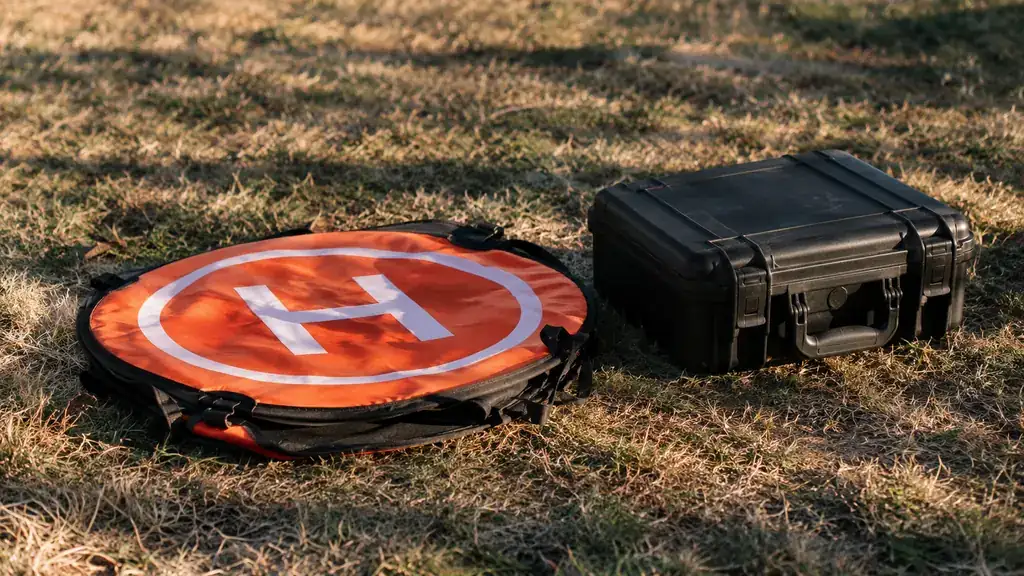
I have had the YINGJEE pad for about two years now, bought the same week as the Mini 4 Pro, and it has taken more abuse than most gear in my truck. It has been stepped on, loaded under a toolbox in the bed, and left out in the rain once when I packed up in a hurry. It still lies flat, the fabric still wipes clean, and the fold lines have not turned into cracks. For a piece of fabric that lives most of its life under a truck seat, that is good enough for me.
The only wear I can point to is cosmetic. The surface has a few scuffs from gravel and the edge has a small crease from being folded the same way for two years. None of it affects how it works. I clean it with a damp rag when it gets muddy, the same way I clean the truck, and it comes back looking close to new. That is more than I can say for the soft shoulder bag I used to carry my old Mavic Air 2, which died under a sliding toolbox.
The Honest Downsides
The pad is not a must-have, and I will not pretend it is. On a short, mowed lawn it does nothing for you. It is one more item in the truck, and on a windy day it can be more trouble than it is worth. The 22 inch size is right for a Mini, but if you fly something larger, you would want a bigger pad, and this one is not it. If I only flew from the park, I would not own one.
The other thing is that the pad does not fix bad landing habits. It will not clear tall grass for you, it will not save you from a hard landing, and it will not keep the drone upright if you fly into a tree and it falls. It is a clean, flat surface, not a safety net. I use it as a tool, and I keep my expectations realistic, which is exactly why it has stayed in my bag for two years.
Who Should Buy Which
Buy the pad if you fly from dry fields, dirt lots, gravel, sand, snow, or anything that is not a maintained lawn. Buy it if you fly in the morning when the dew is heavy, or if you have ever landed on a hidden dip and held your breath. Skip it if you only fly from a mowed backyard or a park with short grass, or if you hand-catch every landing. And if you are not sure, do what I did: fly a month off grass, then a month off the pad, and let the gimbal tell you the difference.
My rule of thumb is simple. If the ground at your usual launch spot looks like something you would not want to kneel on, put a pad under the drone. If it looks like a lawn, save the ten seconds and skip it. Most people I fly with land somewhere in the middle, and the ones who bought a pad for the dusty season are the ones who still carry it.
And one more honest note: the pad will not make your footage better. It will not make your flights smoother or your landings softer. What it does is keep the drone clean and the sensors happy, so the expensive parts last longer. That is a boring job, but it is a real one, and it is the whole reason this comparison exists.
Still on the Fence? Match the Pad to Your Launch Spots
If your regular launch spots are dry, dusty, or wet, the YINGJEE pad solves a problem you have probably already noticed. It folds small, shrugs off mud, and keeps the grit off the camera and sensors. For me, it has been worth it for two years.
Amazon Check Today's Price on Amazon →